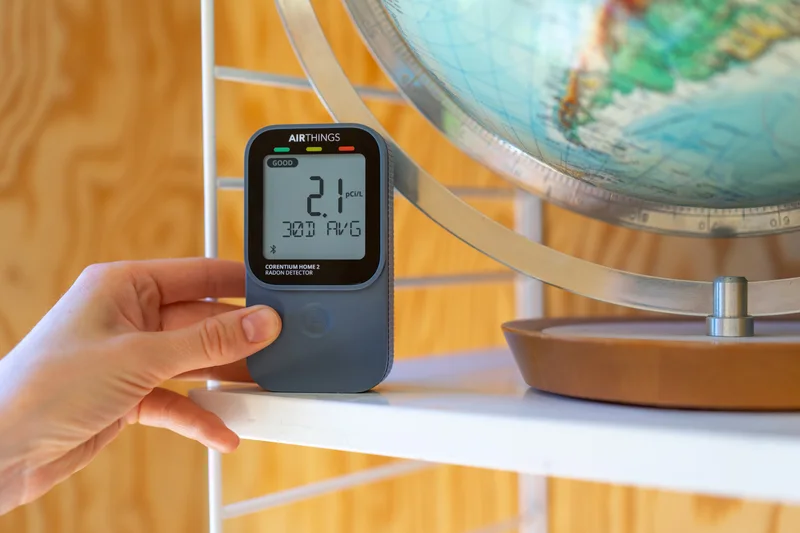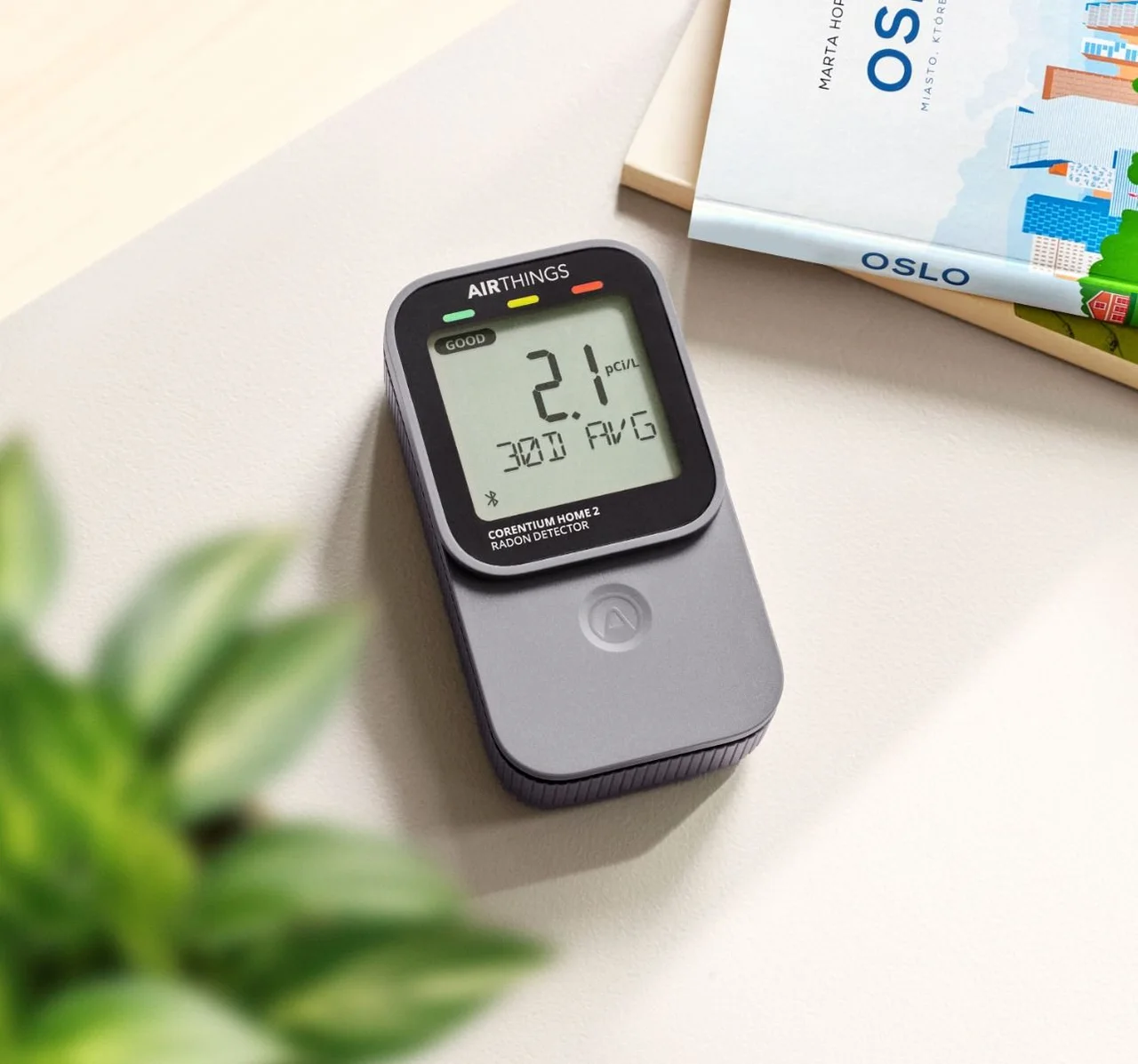
Radon is the rare home-safety issue that most people never think about until a neighbor’s home inspection surfaces an elevated result — and then they want an answer fast. The Airthings Corentium Home 2 is the monitor many of them reach for, because it is the simplest dedicated radon device on the market: a battery-powered puck with a digital display, no app, no account, no setup ritual.
The short verdict: if you want continuous radon tracking and will never open a phone app, the Corentium Home 2 is the easiest path to that goal. It tells you radon levels in pCi/L (or Bq/m³) directly on its screen, shows 24-hour and long-term averages, and runs on batteries for one to two years per the manufacturer. It does nothing else, which is precisely the point.
The problem it solves
Radon has no taste, smell, or color, and short-term test kits give you a single snapshot that can vary with weather, season, and how the house was ventilated during the test window. A continuous monitor answers the follow-up question that always comes after a kit result: “Is it like this all the time?” The Corentium Home 2 samples continuously and displays both the daily average and a long-term average, so a week of data tells you far more than one overnight charcoal test.
It also solves the “I just want it to work” problem. There is no Wi-Fi to configure, no app to download, no firmware to update. You remove it from the box, let it stabilize for a day or two, and read the display. For older homeowners, renters, or anyone who does not want another connected device on the network, that simplicity is a genuine feature.
How it fits into a real home
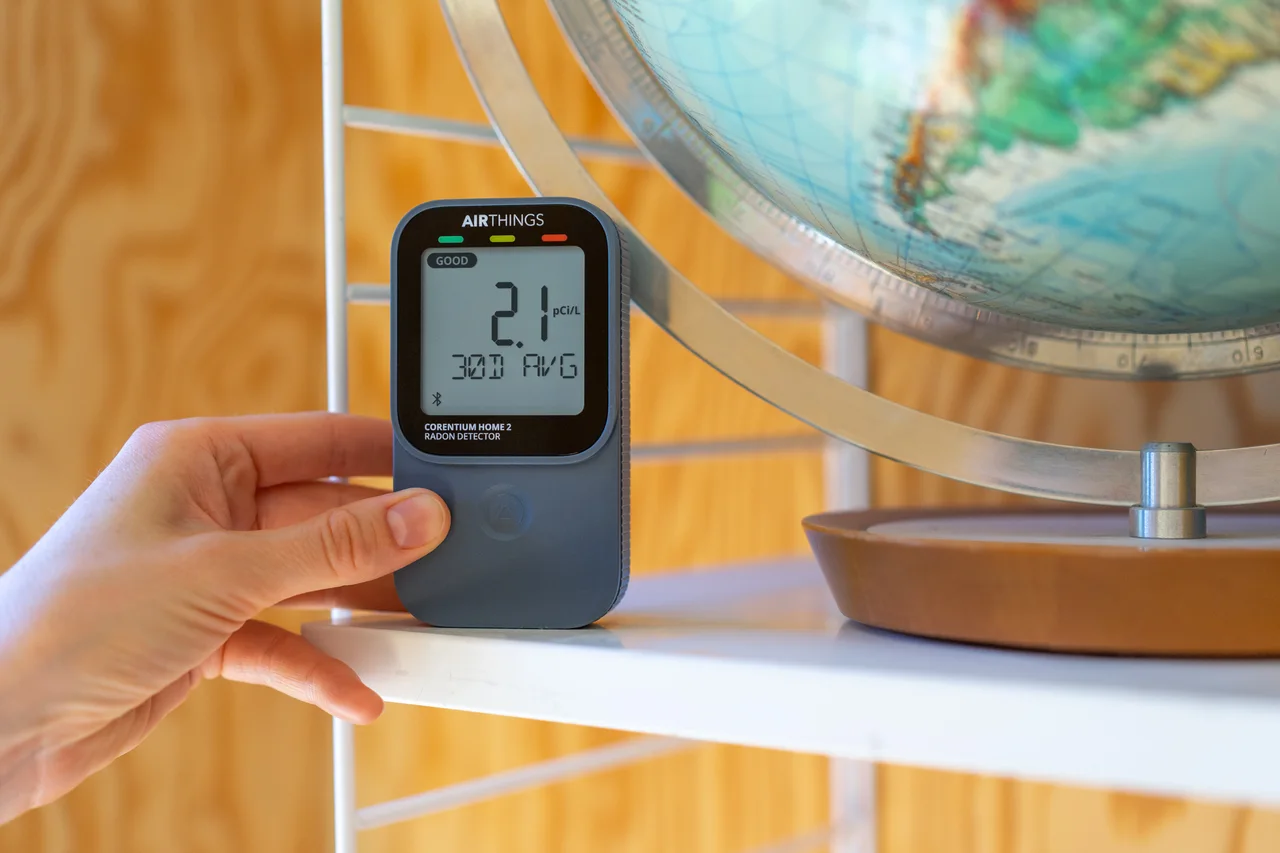
The natural home for the Corentium Home 2 is the lowest level you actually use — a finished basement, a rec room, or a first-floor bedroom in a slab-built house. Because it is battery powered, it can sit on a shelf, a utility table, or a bookcase in a crawl-space-adjacent room without a cord running across the floor. Leave it in one place for weeks and the long-term average becomes your baseline.
That said, this is a “set and read” device, not a “get alerts” device. If you want to be notified the moment levels climb — say, to catch a mitigation system failure — you would pair it with an app-connected monitor or check the display yourself on a schedule.
Who should skip it
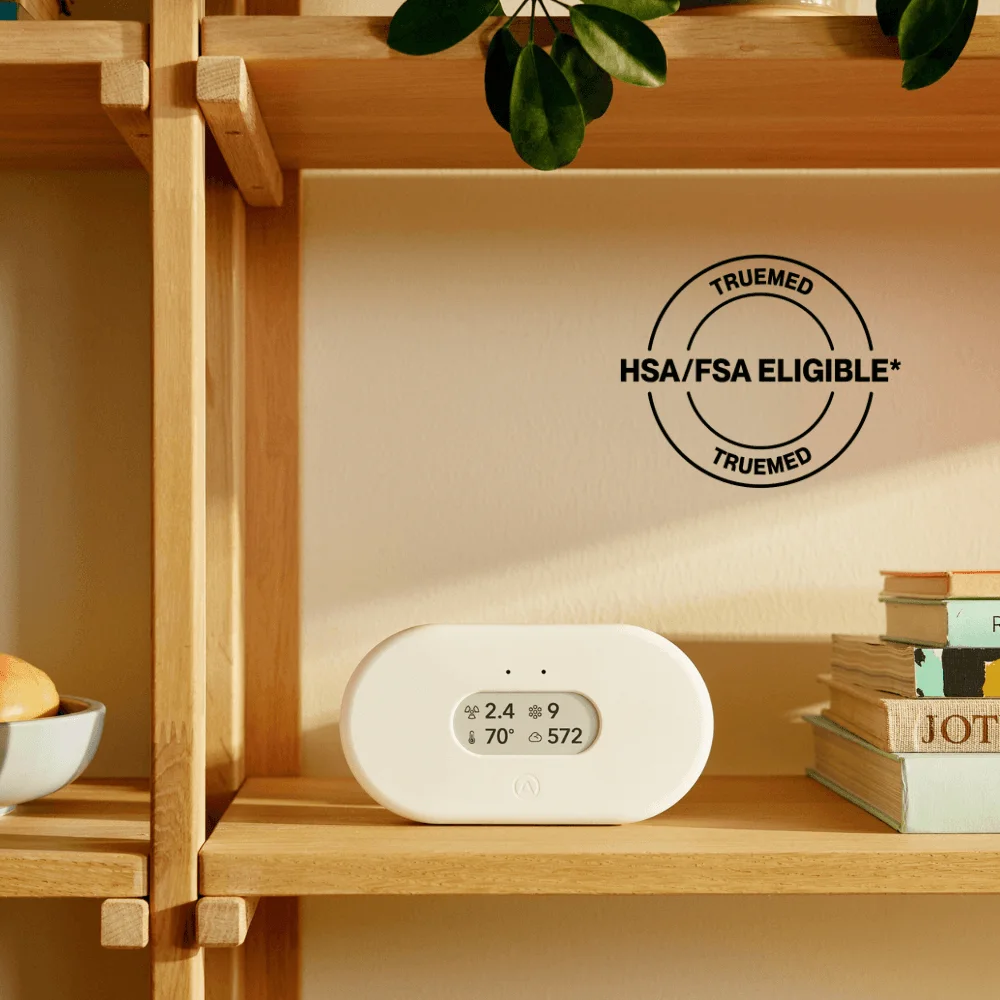
Anyone who wants phone alerts, smart-home integration, or multi-pollutant tracking should skip the Corentium Home 2; it is radon-only by design. If you are buying for a real-estate transaction, a lab-analyzed test kit is the accepted tool for that process rather than a continuous monitor. And if you want radon plus CO2 and particle data in one device, the Airthings View Plus covers far more ground for a higher price.
Alternatives
For faster, app-connected radon updates, the RadonEye RD200 is a popular option with quick response times. For radon with smart-home extras and long battery life, the Aranet Radon Plus adds Home Assistant support. And for one-time screening or pre-sale peace of mind, lab-analyzed kits like the ones in our radon test kit guide are the right call.
Buying advice
The Corentium Home 2 has been on the market long enough that pricing is stable and predictable — there is little reason to wait for a sale, though seasonal discounts do appear. What matters more is verifying the unit’s age if you buy used; radon sensors have a service life, and the manufacturer publishes guidance on that. New units include everything you need in the box, so the only ongoing cost is battery replacement roughly every one to two years.
Frequently asked questions
Does the Corentium Home 2 require a phone or app?
No. It is a standalone device with its own digital display. Short-term (24-hour) and long-term averages are shown directly on the screen, and there is no app, account, or connection required.
How long does it take to get a useful reading?
The manufacturer recommends letting the unit stabilize for a day or so after unboxing. After that, the 24-hour average becomes meaningful, while the long-term average grows more reliable the longer the device stays in one place.
Is a continuous monitor more accurate than a test kit?
They answer different questions. A lab-analyzed test kit gives a certified snapshot used for decisions like real-estate transactions. A continuous monitor shows how levels fluctuate over time. Many homeowners use a kit first, then a monitor like the Corentium Home 2 to track the result over the year.
Where should I not place it?
Avoid exterior walls, direct drafts, bathrooms, and other high-humidity spots, which can skew radon readings. The lowest regularly occupied level of the home is the typical recommendation.
What do the radon readings mean?
The display shows concentration in pCi/L or Bq/m³ depending on the unit setting. For what any given level means in your region, check guidance from your local health or environmental authority — that interpretation varies by country and jurisdiction.