If your home has a basement, it has a radon question. Radon enters through soil contact — cracks in slabs, sump pits, and foundation gaps — which is why below-grade spaces tend to see the highest concentrations. The good news is that monitoring is inexpensive and actionable: a continuous monitor in the basement turns an invisible risk into a number you can watch through the seasons.
This guide covers the monitors that suit basements and crawl spaces specifically, plus when a mail-in test kit is the right tool instead.
What to look for
- Placement practicality. Basement shelves and crawl-space corners rarely have convenient outlets. Battery-powered monitors win here; anything requiring mains power needs a plan.
- Long-term averaging. Radon varies with weather, soil moisture, and ventilation. The monitor should display short and long-term averages, not just a fluctuating number.
- Response speed. Fast response helps verify a mitigation system after installation. Slower smoothing is fine for long-term tracking.
- App or no app. Display-only monitors are robust and simple; app-connected ones add history and alerts. In a basement, either works — the deciding factor is whether you will actually check it.
- Sensor reliability. Passive alpha detection and ionization chambers are the two common consumer technologies; both are suitable for trend tracking when the device is left in one place.
The picks
RadonEye RD200 — best quick-response monitor for verification
The RadonEye RD200 is our pick for basements after mitigation work or for anyone who wants faster feedback than typical radon monitors provide. Its pulsed ionization sensor updates readings frequently, and the Bluetooth app keeps graphs of the data. It is compact enough for a utility shelf, battery powered, and focused on radon — no extra sensors to pay for. The caveat: quick readings are noisier than long averages, so let it run for days before drawing conclusions.
Airthings Corentium Home 2 — best no-app option for crawl spaces
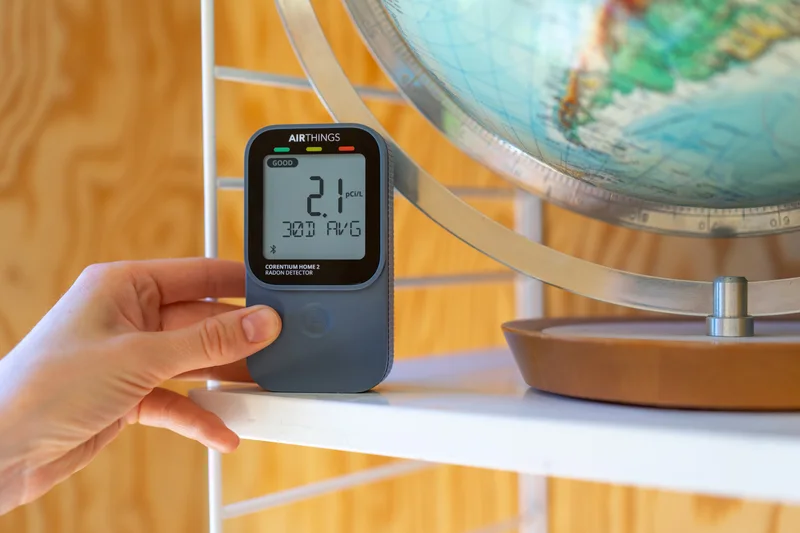
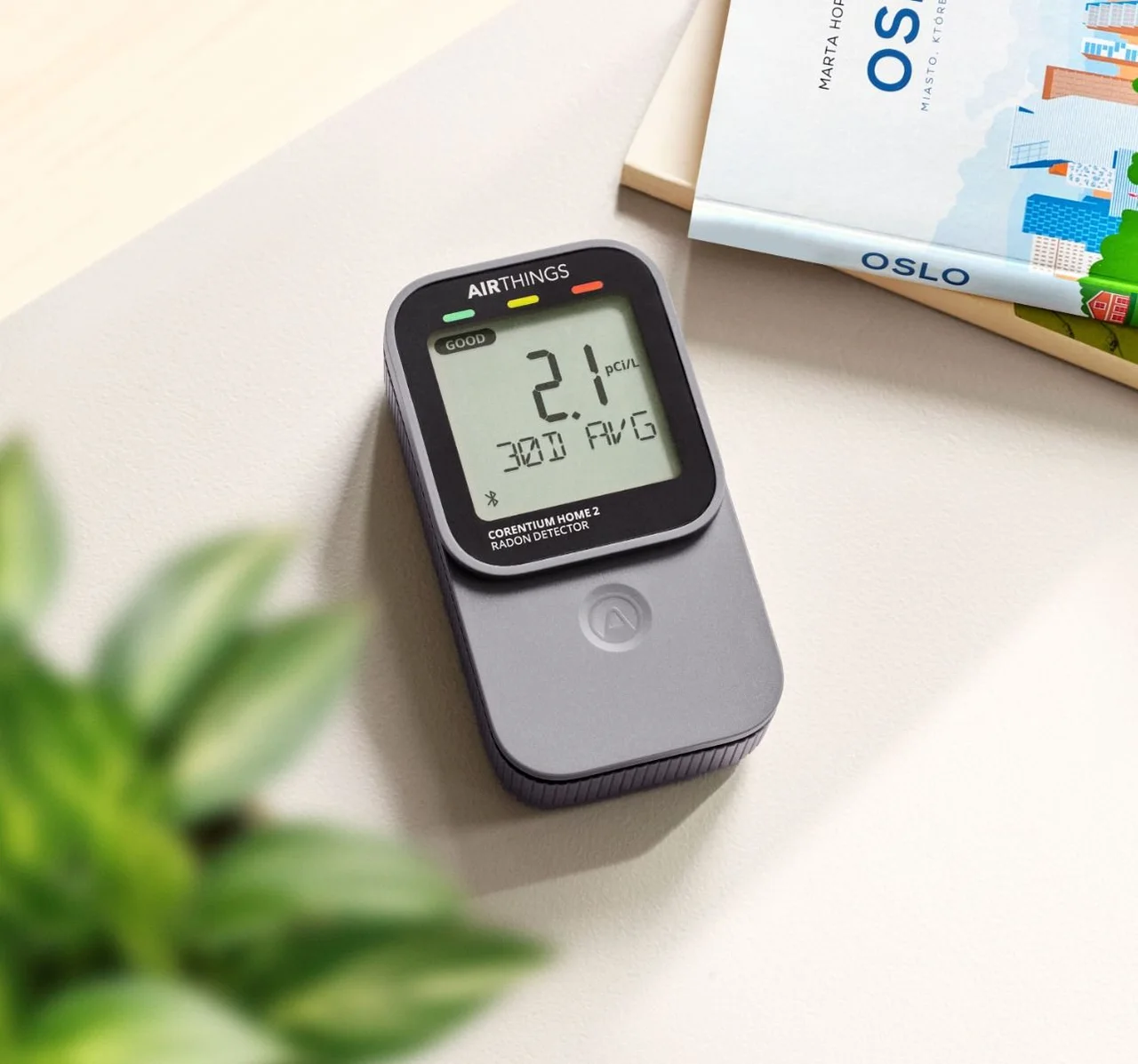
The Airthings Corentium Home 2 is the display-only classic, and it shines in spaces where you do not want another connected device. It shows 24-hour and long-term averages on its screen, runs on batteries for one to two years per the manufacturer, and needs no app, Wi-Fi, or account. For a crawl-space shelf or a utility room, simplicity is a feature. The tradeoff: no alerts and no history beyond the display.
Airthings Wave Plus — best multi-sensor pick for finished basements
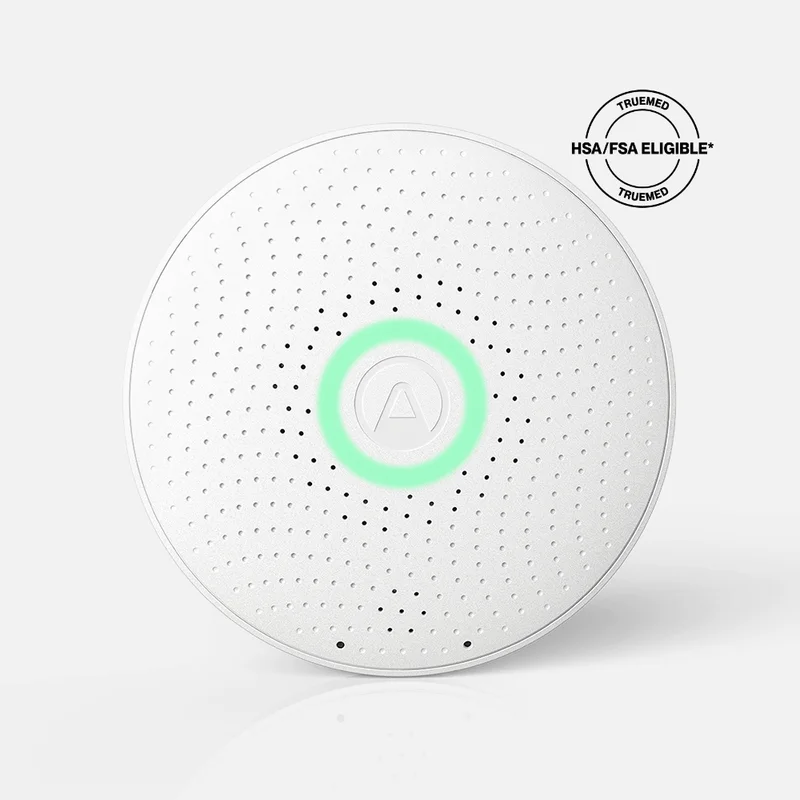
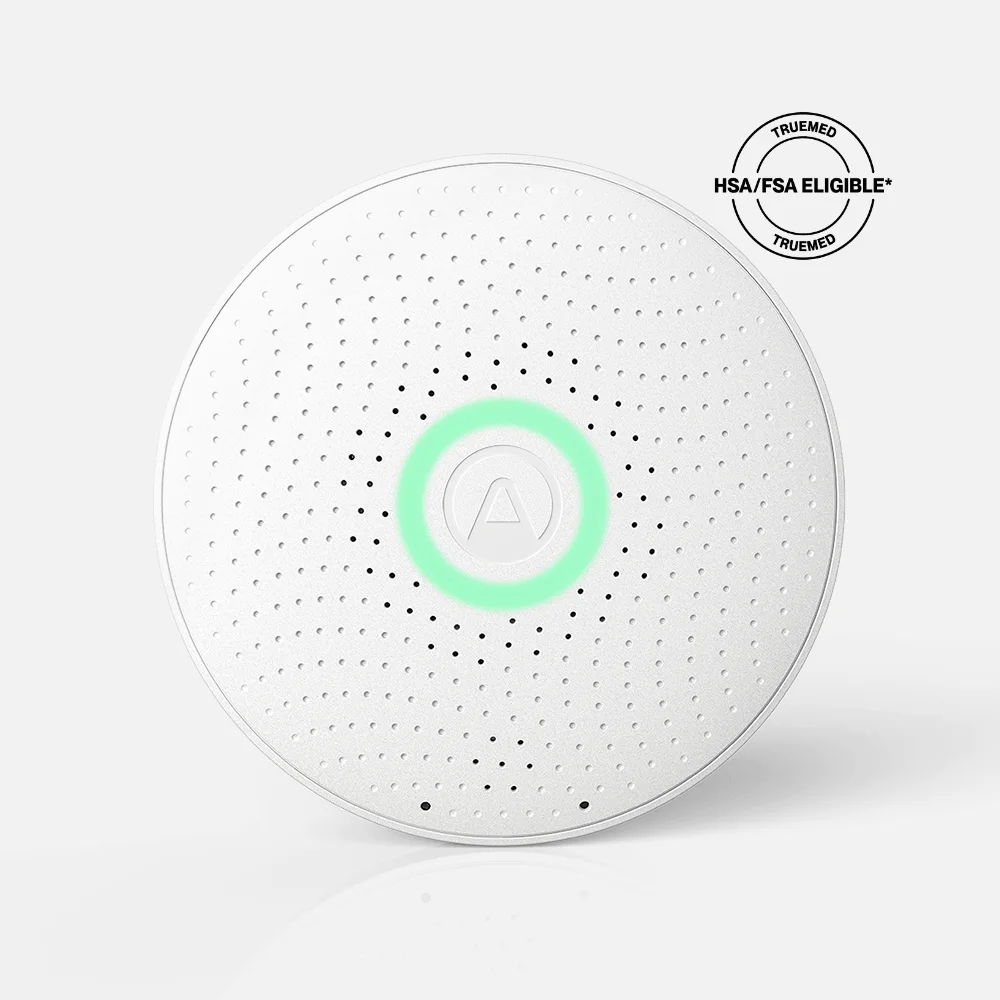
Finished basements are rooms, not storage — they deserve the same air quality coverage as the rest of the house. The Airthings Wave Plus tracks radon alongside VOCs, CO2, temperature, humidity, and pressure, with a wave gesture to wake its display and about two years of battery life per the manufacturer. It lacks the app-free simplicity of the Corentium Home 2 but adds the multi-pollutant data a rec room actually needs.
Real-world usage scenarios
- The rec room. A finished basement with a couch and TV is occupied space — use a multi-sensor monitor like the Wave Plus to track radon plus the CO2 and humidity that make it feel stuffy.
- The utility corner. For an unfinished space, a display-only monitor on a shelf gives you the radon number with zero maintenance friction.
- Post-mitigation. After a mitigation system is installed, a quick-response monitor verifies the fix within days and stays on watch for drift.
- The crawl space. Battery-powered, no-app monitors are the only practical choice where you will visit monthly at best.
Buying advice
Match the monitor to how often you visit the space. A rec room deserves a monitor you interact with; a crawl space deserves one you can ignore for months. Do not pay for smart features you will never open in a utility room, and do not choose a mains-powered monitor for a location without power. For a one-time answer — a home purchase, a refi, a formal record — skip the continuous monitor and use a lab-analyzed test kit; the consumer device complements, but does not replace, that process.
Frequently asked questions
Why is radon higher in basements?
Radon rises from the soil through foundation contact points — slab cracks, sumps, and pipe penetrations. Below-grade spaces have the most soil exposure, so they typically record the highest concentrations in a home.
How long should I monitor a basement?
Longer is better. Radon levels shift with seasons, weather, and how the house ventilates, so at least a few months of continuous data gives a realistic picture. Many households run a monitor year-round.
Where exactly should the monitor go?
In the lowest regularly occupied level, on an interior wall away from exterior walls, drafts, and sources of moisture. Keep it at breathing height in occupied rooms, or on any stable shelf in utility spaces.
What if levels are elevated?
Compare readings against the action level used in your region (for example, the US EPA's 4 pCi/L guidance) and contact a qualified radon mitigation professional. Mitigation systems are proven and typically lower levels significantly.
Can one monitor cover the whole basement?
Radon concentrations can vary within a building, but a single monitor in the main occupied area is a reasonable starting point. If you find wide variation, consider a second unit or professional testing.