Renting should not mean drinking bottled water forever. The filter world has quietly solved the landlord problem: countertop reverse osmosis systems purify without plumbing, and high-capacity pitchers handle taste without any hardware at all. Both leave your kitchen exactly as you found it — no holes, no drain lines, no deposit at risk.
This guide covers the no-install water filters we recommend for apartments and rented homes, from serious RO purification to pitcher simplicity.
What to look for
- Zero-install requirement. The system should set up in minutes with no drilling, no drain connection, and no permanent fixtures. Check this explicitly — some “countertop” systems still want plumbing.
- Purification depth. If you want RO-level contaminant reduction, verify the system actually uses a reverse osmosis membrane. If taste is the goal, a pitcher’s certified claims may be enough.
- Footprint. Counter space is precious in apartments. Measure where the system will live before buying.
- Refill convenience. Reservoir-based systems need topping up. Match reservoir size to your daily water use.
- Moving with you. The best rental filter packs into a box and relocates without a trace — the whole point of this category.
The picks
Waterdrop K19 — best countertop RO for renters
The Waterdrop K19 is the upgrade path for renters who want real RO purification: 400 gallons per day output, a touch display with TDS monitoring, and a refillable reservoir that needs no plumbing at all. It delivers the contaminant depth of under-sink RO without a single permanent change, and it moves with you in one box. The tradeoffs are counter space and the refill routine — honest costs for the convenience.
SimPure T1-400 — best budget countertop RO
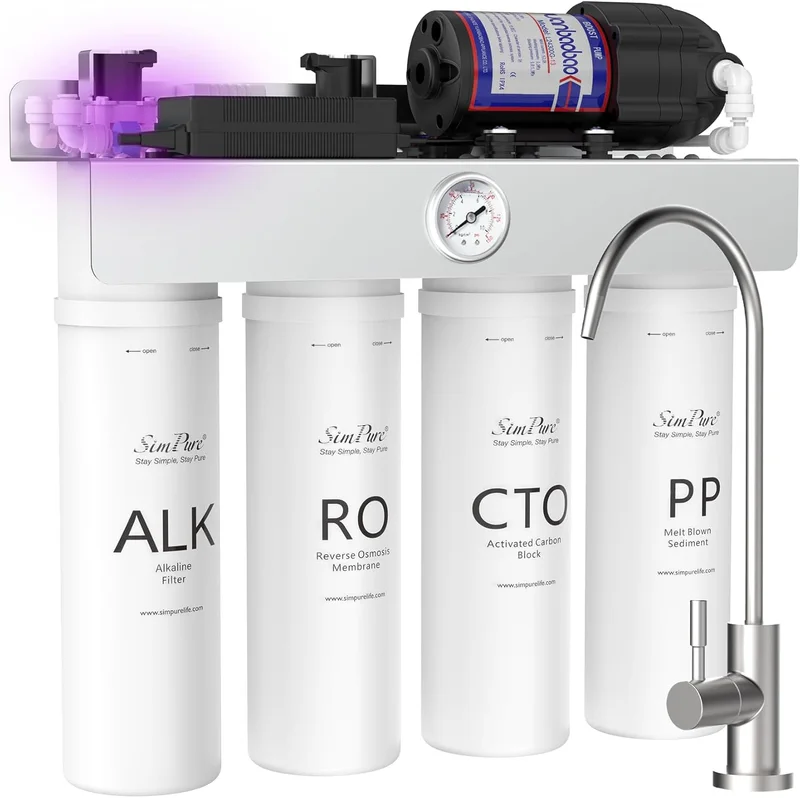
The SimPure T1-400 covers the same no-install RO promise at a friendlier price: real reverse osmosis, 400 gallons per day, filter-life display, and a refillable reservoir. It is less polished than the K19, but for budget-minded renters who want genuine RO purification — not just carbon taste filtering — it is the value pick.
Clearly Filtered Pitcher — best contaminant claims without power
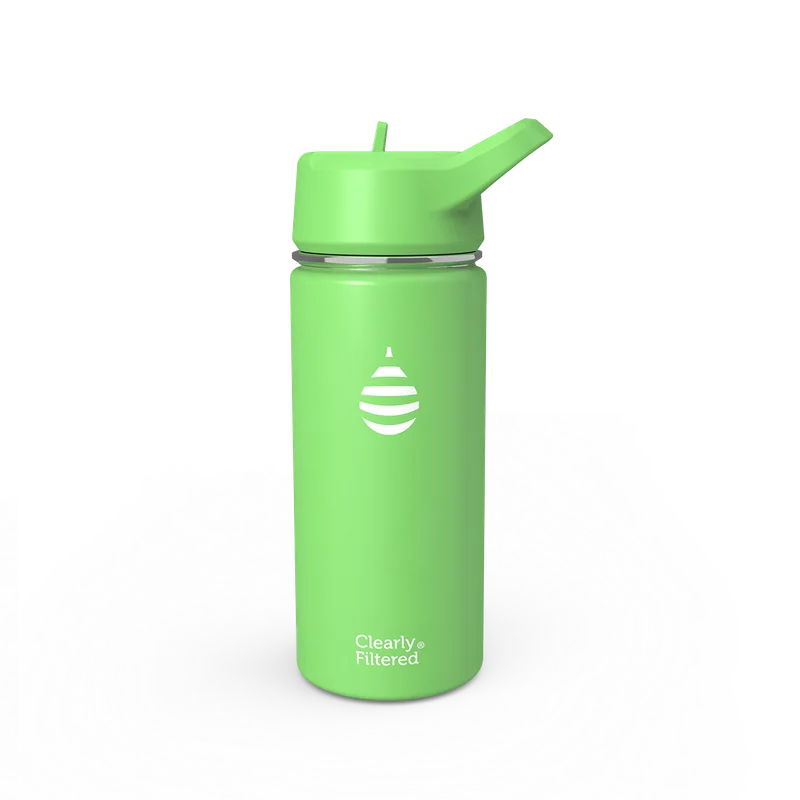
If countertop hardware feels like too much, the Clearly Filtered Pitcher is the most capable plug-free option we cover — published lab testing claims reduction of 230+ contaminants, far beyond typical pitcher filters. It needs no power, no reservoir, and no counter surgery, just a fridge shelf. The filter cost is higher than mainstream pitchers, but so is the contaminant coverage.
ZeroWater 10-Cup — best proof of filtration for hard water
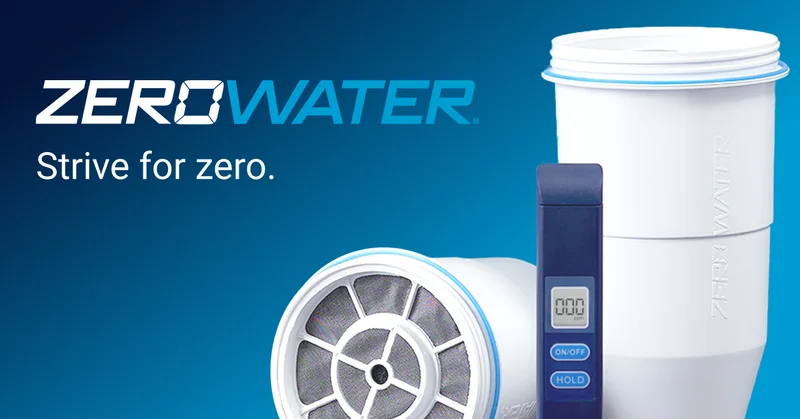
For renters in hard-water areas, the ZeroWater 10-Cup adds something the others cannot: a TDS meter that shows dissolved solids dropping to near zero. It is the most honest no-install option for measuring whether filtration is working, and it is great for taste in hard-water apartments. Expect faster filter wear in hard water and slower flow — the tradeoffs for that measurable performance.
Real-world usage scenarios
- The first apartment. A countertop RO on the counter replaces bottled water, tastes better than tap, and survives lease changes.
- The studio kitchen. A pitcher fits where a countertop system will not — measure your space and choose accordingly.
- The furnished rental. No-install systems protect the deposit: nothing is drilled, mounted, or connected to the building’s plumbing.
- The frequent mover. Households that relocate every year or two get compounding value from systems that travel without leaving marks.
Buying advice
Decide between purification depth and simplicity first. RO-level systems need counter space and a refill routine; pitchers need neither but deliver less contaminant coverage. Budget for filters in both cases — the ongoing cost is the real price. If you rent in a hard-water area, the TDS meter’s proof is worth the extra filter wear. And when you eventually own a home, the same budget can step up to an under-sink system — the no-install system you bought now keeps working as a backup or travel kit.
Frequently asked questions
Will a countertop RO system damage my countertop?
No — these systems sit on the counter and connect to nothing. They leave no marks, use no drilling, and pack away cleanly. Just keep water off wood surfaces during refills like you would with any appliance.
How much counter space do countertop systems need?
Most units occupy roughly the footprint of a coffee maker, though heights vary. Measure your counter and check the system's published dimensions before buying.
Are pitchers enough, or should I get RO?
For taste and everyday chlorine concerns, pitchers are excellent value. For broader contaminant reduction — metals, dissolved solids, emerging compounds — RO systems like the K19 or SimPure go far deeper.
What happens to the system when I move?
You unplug it, drain it, and pack it. Countertop systems are self-contained, so they travel to the next kitchen with no plumbing work either way.
Do no-install systems need electricity?
Countertop RO systems plug in to pump water through the membrane; pitchers need nothing. If outlets are scarce in your kitchen, that may be the deciding factor.