Well water has no utility to fix it. What comes out of the tap is what the ground gives you — and depending on your aquifer, that can mean sediment, iron stains, hard-water scale, sulfur smell, or bacterial surprises. The right whole-house treatment depends entirely on your water test, which is why the first step in this guide is not a product recommendation but a water test.
Here is how to choose a whole-house filter for a well home, with the systems we recommend for the most common well-water profiles.
What to look for
- Start with a lab test. No filter should be chosen blind. A certified well-water test tells you what is actually present: hardness, iron, manganese, sulfur, nitrates, coliform bacteria, and pH.
- Match the system to the contaminant. Carbon systems handle chlorine and chemicals but not hardness or iron. Water softeners handle hardness but do not filter. Iron filters, sediment filters, and UV systems each solve a specific problem.
- Flow rate and house size. A whole-house system must supply every tap at once. Match the system’s rated flow to your home’s fixture count.
- Maintenance burden. Well systems need regular backwashing, cartridge changes, or media regeneration. Choose a maintenance rhythm you can actually keep.
- Bacteria protection. If coliform is a concern, UV disinfection after filtration is the standard tool — a filter alone does not sanitize.
- Certifications and documentation. Look for tested, published contaminant-reduction claims rather than marketing language.
The picks
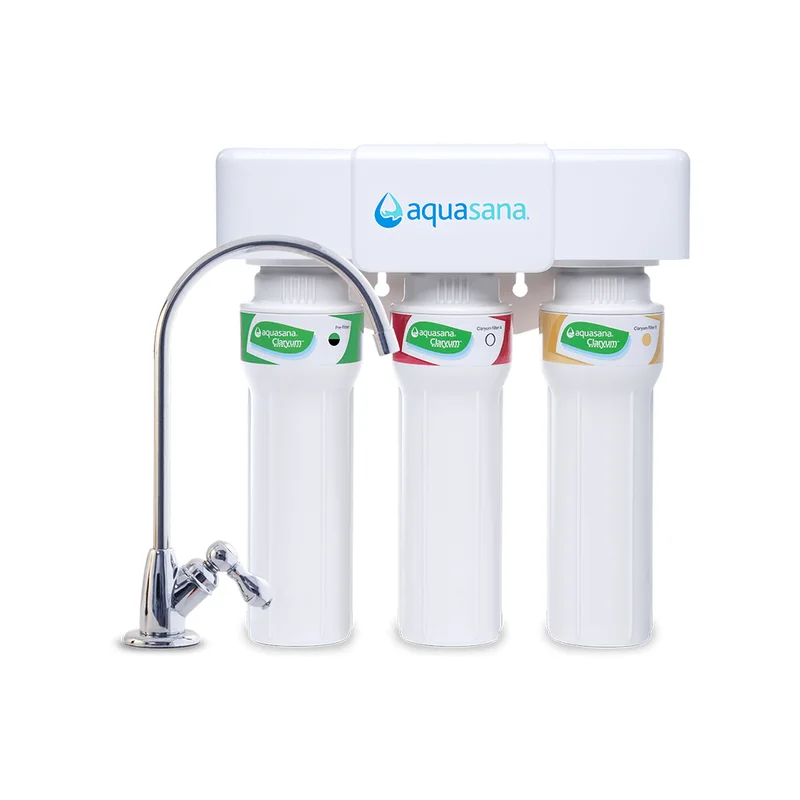
Aquasana AQ-5300+ — best whole-house carbon system for city-quality wells
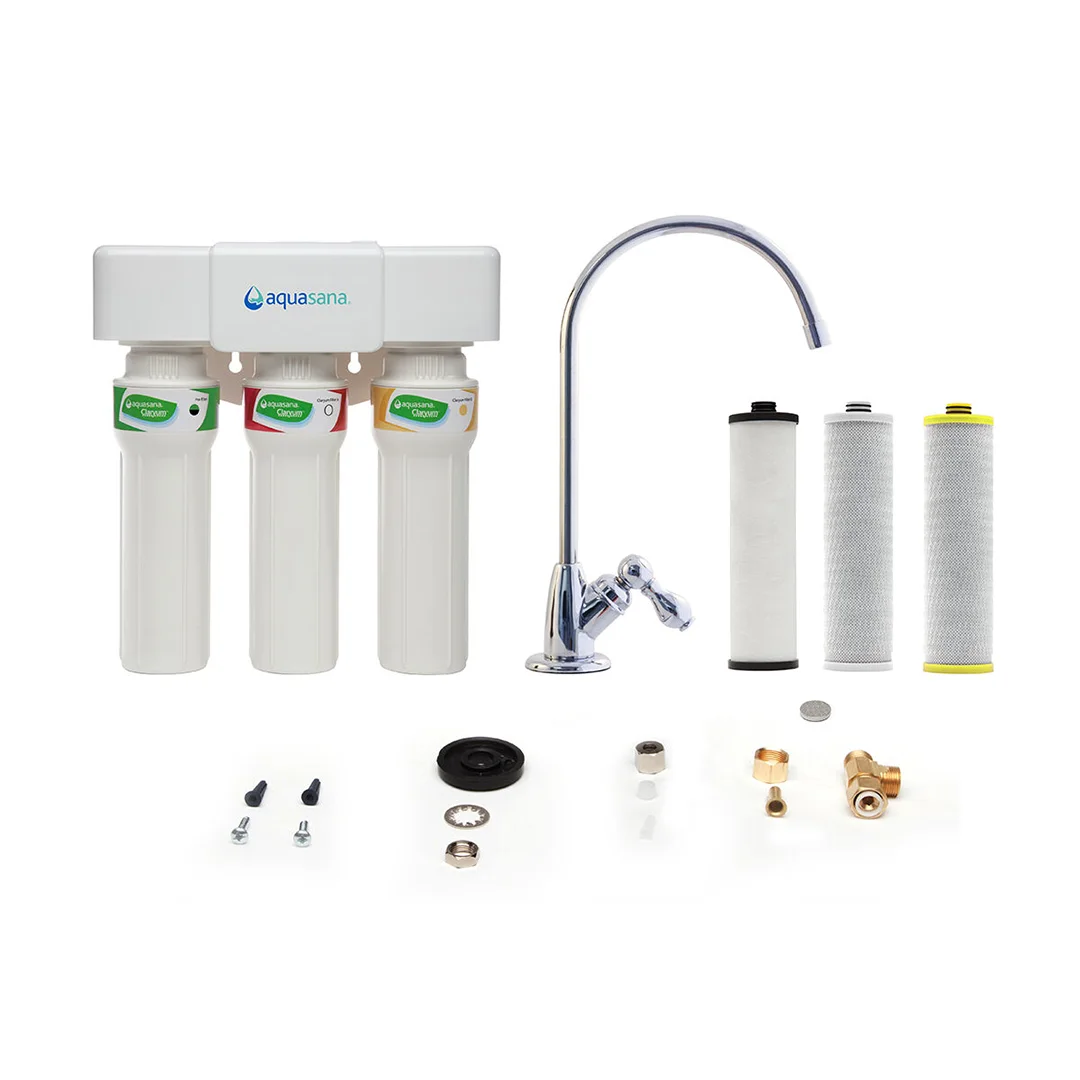
For well homes whose testing shows chlorine or chemical concerns — and whose water is otherwise clean — the Aquasana AQ-5300+ brings certified contaminant reduction to every tap. It is a three-stage design with annual cartridges and published reduction claims, including select emerging contaminants. It is not a softener or an iron remover, so review its certified list against your test results before buying.
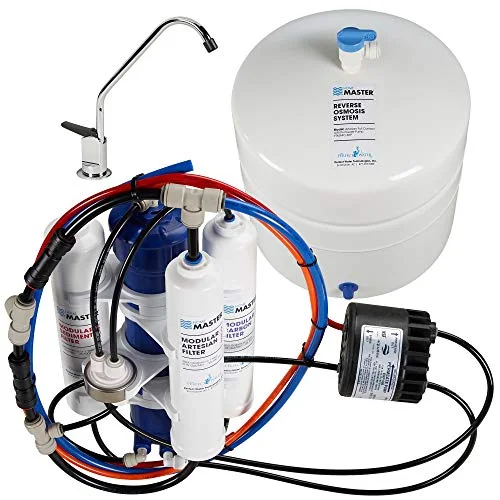
Home Master TMAFC-ERP — best point-of-entry RO for high-contaminant wells
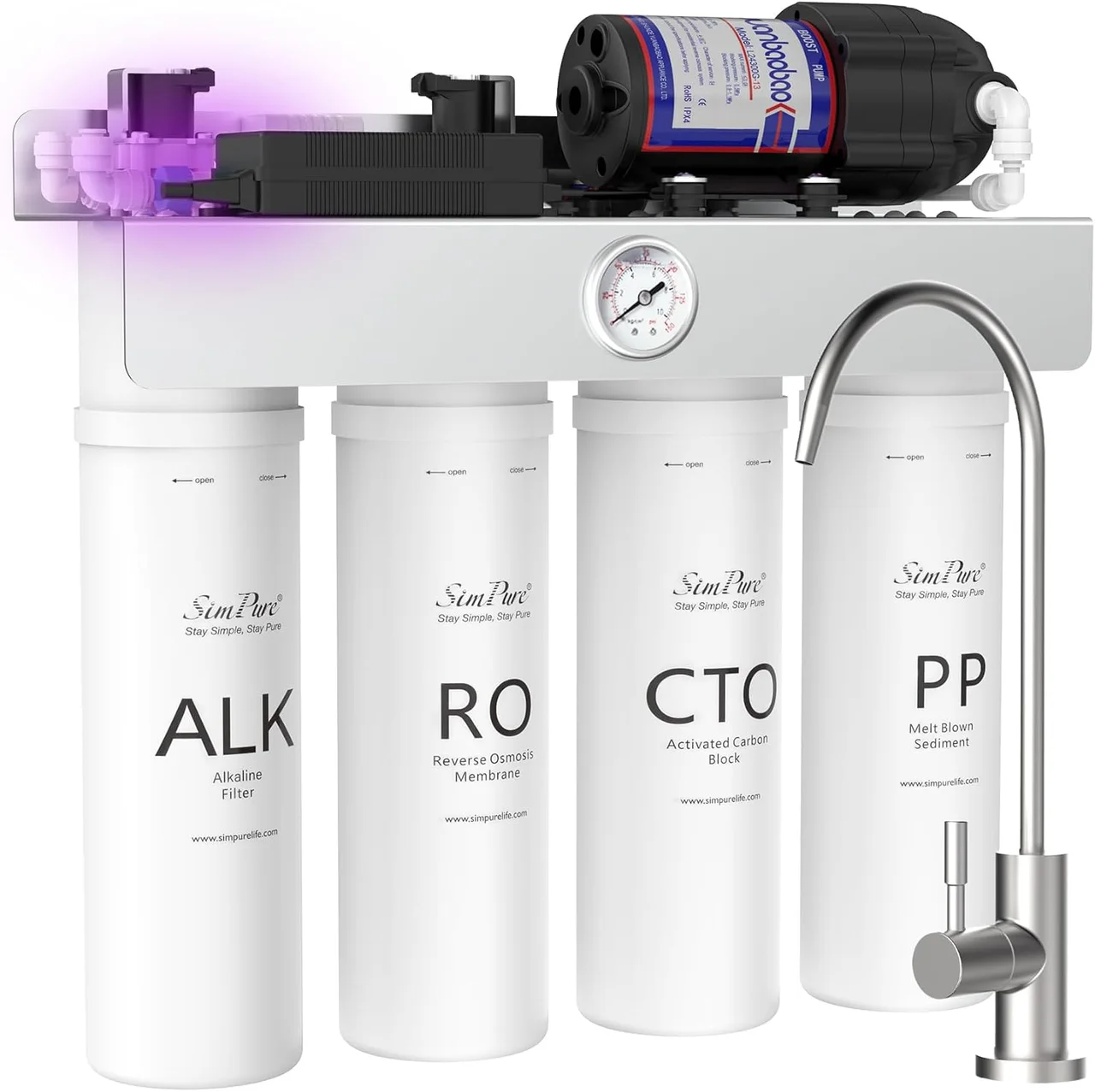
When well testing reveals dissolved solids or heavy metals that need serious removal, a point-of-entry reverse osmosis system like the Home Master TMAFC-ERP treats water at the main line — including an alkaline stage for taste. RO at whole-house scale is a significant investment with real maintenance, but for wells with high TDS or metals, it is the most complete single system we recommend. Confirm your well’s specific contaminants are on its reduction list.
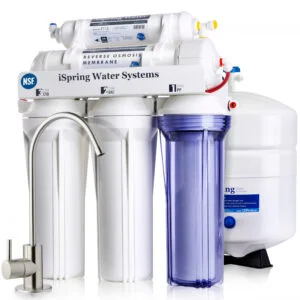
iSpring RCC7 — best supplemental under-sink RO for well kitchens
Many well homes solve drinking water separately: whole-house filtration for showers and laundry, plus an under-sink RO like the iSpring RCC7 for the kitchen. That combination is often the most cost-effective answer — the RO handles dissolved solids for drinking while a sediment or softener system protects the rest of the house. If your budget allows only one upgrade, the kitchen RO is where the health benefit concentrates.
Real-world usage scenarios
- The iron-stained laundry room. Rust-colored streaks on fixtures and clothes point to iron or manganese — a job for an iron filter or softener, not a carbon filter.
- The spotty glassware kitchen. Hard-water scale everywhere means a softener belongs before or alongside your drinking-water system.
- The sulfur-smell bathroom. A rotten-egg odor usually means hydrogen sulfide gas — treatable with specialized media or aeration, and worth a professional consult.
- The rural family home. Families with children often combine sediment filtration, UV disinfection, and a kitchen RO as a layered defense — each stage covers what the others cannot.
Buying advice
Spend the money on the test before the system — a $100 test routinely saves hundreds by preventing the wrong purchase. Then match the system to the top two or three problems in the report, not the full list of everything you might someday worry about. Budget for maintenance media and cartridges from day one, and talk to local well professionals who know your aquifer; regional geology means the same “bad water” can have different causes two towns apart. Whole-house systems are major purchases — compare installed quotes from at least two professionals when plumbing is involved.
Frequently asked questions
How often should I test my well water?
Annual testing for coliform bacteria, nitrates, and basic chemistry is a common recommendation, with more frequent testing after flooding, nearby construction, or any change in taste or smell. Your local health department can recommend the right panel for your region.
Do I need a softener AND a filter?
Often yes — they solve different problems. A softener removes hardness minerals (calcium and magnesium); filters remove sediment, chemicals, iron, or other contaminants. Your test report dictates which combination you need.
Does whole-house filtration make well water safe to drink?
Filtration reduces the contaminants a given system is designed and certified for. Bacteria need disinfection (typically UV), and some dissolved contaminants need RO or specialty media. The right answer comes from matching your test report to the right treatment train.
What is backwashing and why does it matter?
Media-based filters (iron, sediment, softeners) periodically flush collected contaminants out of the media in a reverse flow. A system with automatic backwashing is far easier to maintain than one requiring manual regeneration.
Can I install a whole-house system myself?
Sediment housings are DIY-friendly, but softeners, iron filters, and UV systems involve plumbing, electrical work, and sizing decisions. Professional installation is worth it for most well homes — mistakes here affect every tap.