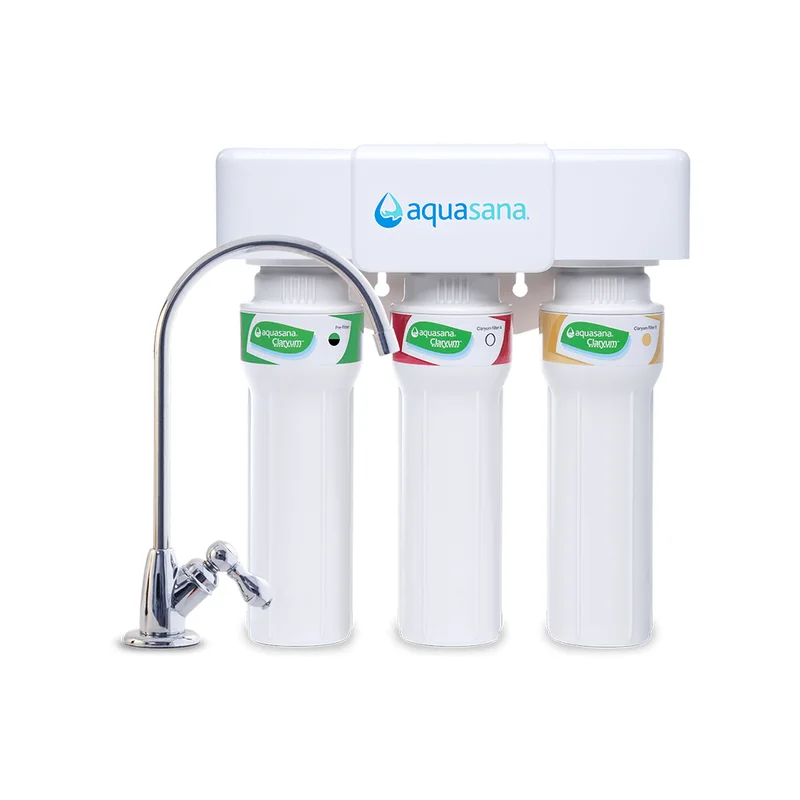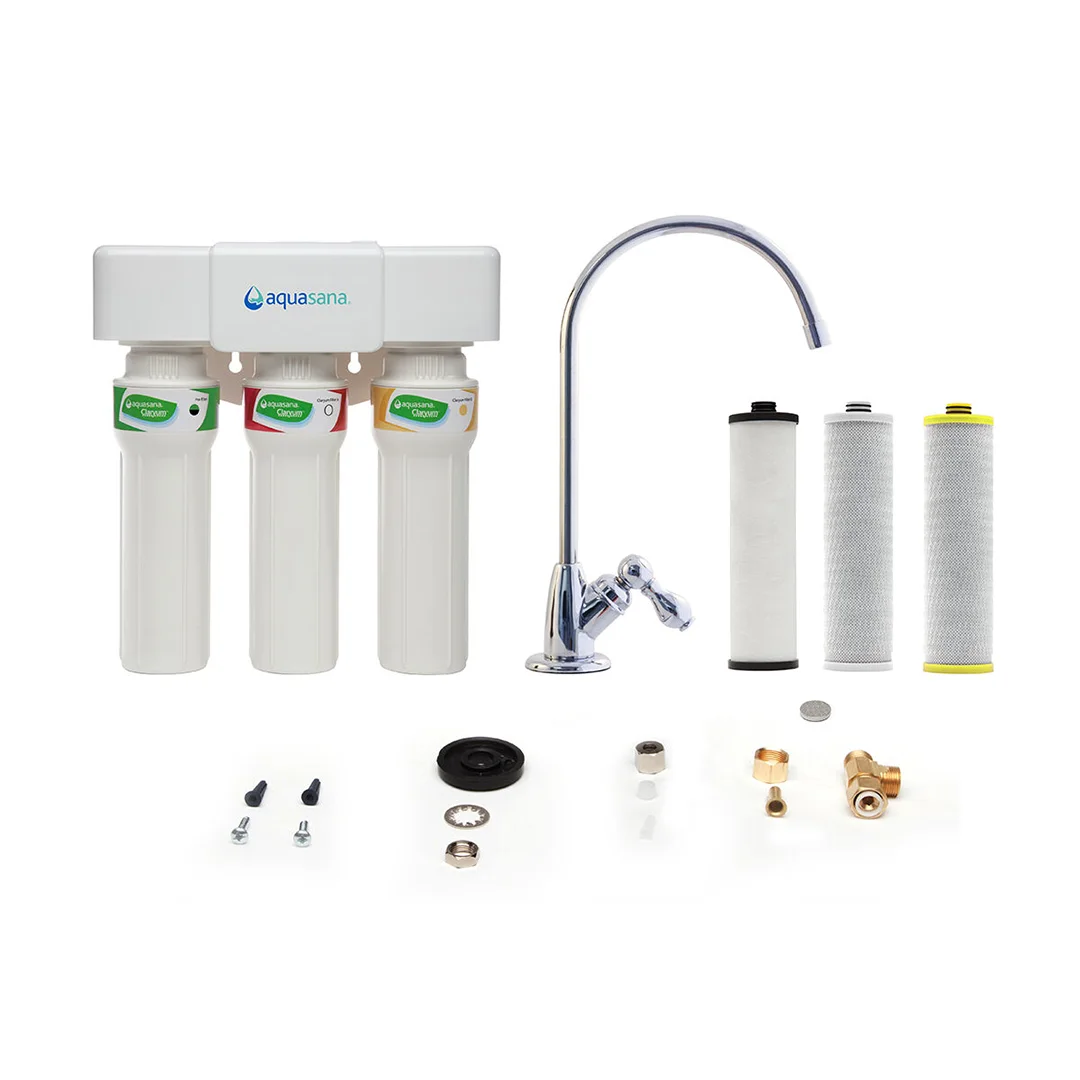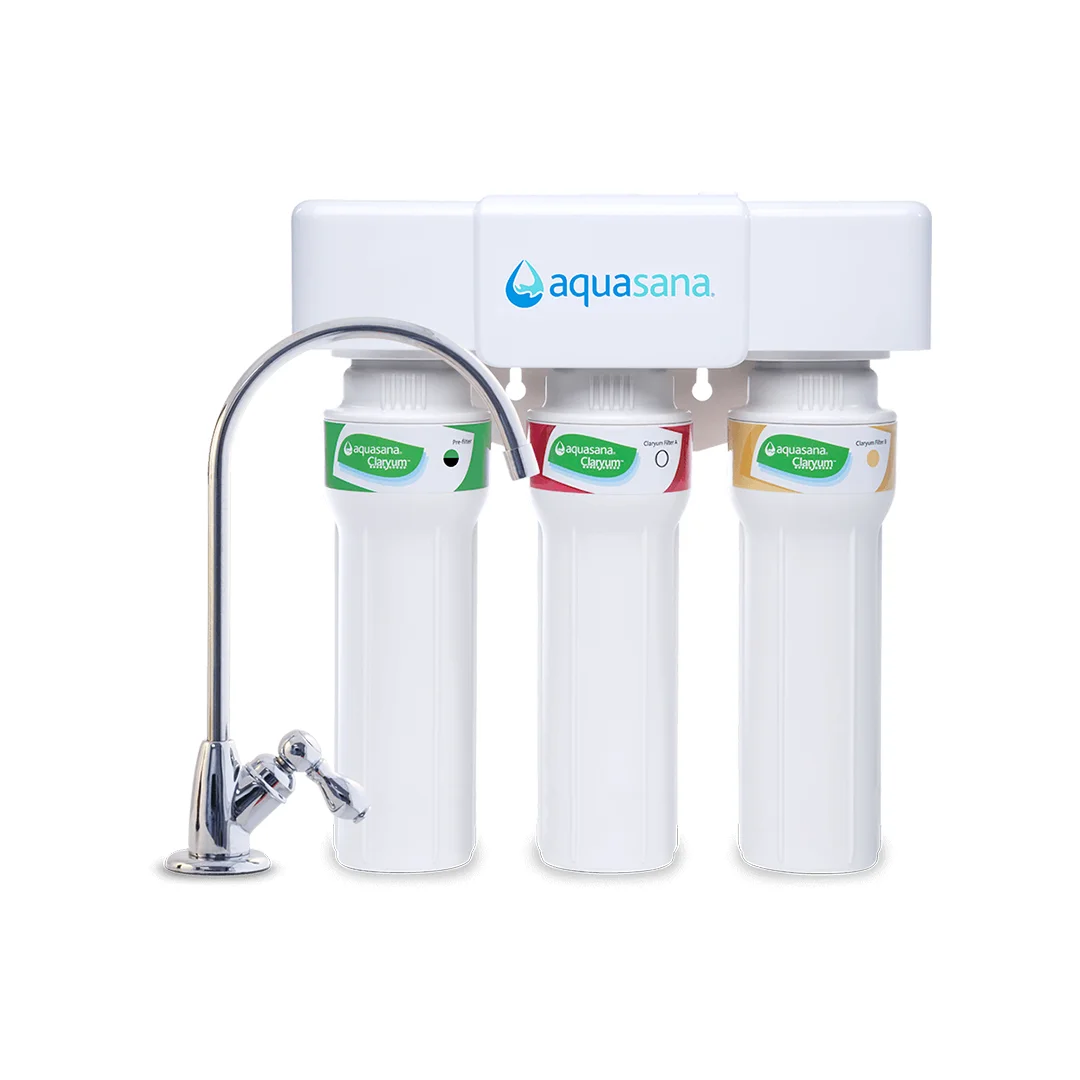
Point-of-use filters improve one tap. Whole-house filtration improves the water everywhere at once — showers, washing machines, humidifiers, and every sink. The Aquasana AQ-5300+ is the whole-house system we recommend most for city water, because it pairs certified contaminant-reduction claims with a straightforward three-stage design that most households can maintain with annual cartridges.
The short verdict: based on its published specifications, the AQ-5300+ is the best whole-house filter for municipal water in our guide — treating chlorine, chloramine-related tastes, sediment, and select emerging contaminants like PFOA/PFOS with certified claims. It needs real installation space and a serious upfront investment, which is the honest tradeoff.
The problem it solves
Chlorine is the most common reason tap water tastes and smells like a pool — and every shower, laundry load, and sink draw delivers it. The AQ-5300+ addresses the whole house with a three-stage design: sediment pre-filtration, a carbon block for chlorine and chemical reduction, and a third stage for further contaminant removal. For households with sensitive skin or hair, the shower-water difference alone is often the reason families buy it.
What sets the Aquasana apart from cheaper whole-house options is the certified claims. The system publishes contaminant-reduction certifications — including chlorine and PFOA/PFOS — rather than vague “improves water quality” language. For buyers who want to know exactly what they are removing, that documentation is the product.
How it fits into a real home
The system installs on the main water line, typically in a basement, utility room, or garage — where there is space for a filter housing and room to change cartridges. Installation is a job for a plumber or a confident DIYer with the right tools, and the space requirement is the real constraint: apartments and tight utility closets usually cannot fit it.
Once installed, maintenance is annual cartridge replacement. The running costs are predictable, and the benefit is everywhere: softer-feeling showers, cleaner-tasting water at every tap, and appliances that see less chlorine-laden water. Households on municipal water notice it within days; well-water homes should read the well-water guide instead, since the AQ-5300+ is built around city-water chemistry.
Who should skip it
If you rent or lack installation space, a whole-house system is not practical — point-of-use filters or a countertop system make more sense. If your water comes from a private well with sediment, iron, or bacteria concerns, you need a different treatment strategy than a city-water carbon system. And if the only tap that matters is the kitchen sink, an under-sink system delivers most of the benefit at a fraction of the cost.
Alternatives
For well-water whole-home needs, the Home Master TMAFC-ERP and iSpring systems cover different contaminant profiles. For single-tap RO, the Waterdrop G3P800 is our tankless pick. Start with our whole-house guide to compare systems by water type.
Buying advice
Budget for the installation, not just the unit. A plumber’s visit often costs as much as the system itself, and the location of your main water line determines how hard the job is. Verify the system’s certified contaminant list against your utility’s annual water quality report — that document tells you what is actually in your water and whether the claims matter for you. Filter costs are annual and predictable; factor them into the comparison against point-of-use alternatives before committing.
Frequently asked questions
Does whole-house filtration remove lead?
It depends on the certified claims of the specific system. Check the published contaminant-reduction list against your water test results — if lead is a concern, confirm the system's certification covers it and that your plumbing is the source.
Will it make water safe if my utility reports a violation?
Whole-house systems reduce the contaminants they are certified for, but they are not a universal safety device. Follow your utility's advisories — including boiling notices — and consult your local health authority for specific guidance.
How often do cartridges need changing?
The AQ-5300+ uses annual cartridges per the manufacturer's guidance. Replacements are predictable, and filter-life is the main ongoing cost to budget.
Can I install it myself?
It is a main-line installation requiring plumbing work — possible for skilled DIYers, but a plumber is a reasonable choice for most households. Check warranty terms, as some warranties have installation requirements.
Is whole-house filtration worth it compared to under-sink?
If your goals are shower water, laundry, and every tap, yes — only whole-house treatment reaches them. If only drinking water matters, an under-sink or countertop system delivers most of the value for less money.