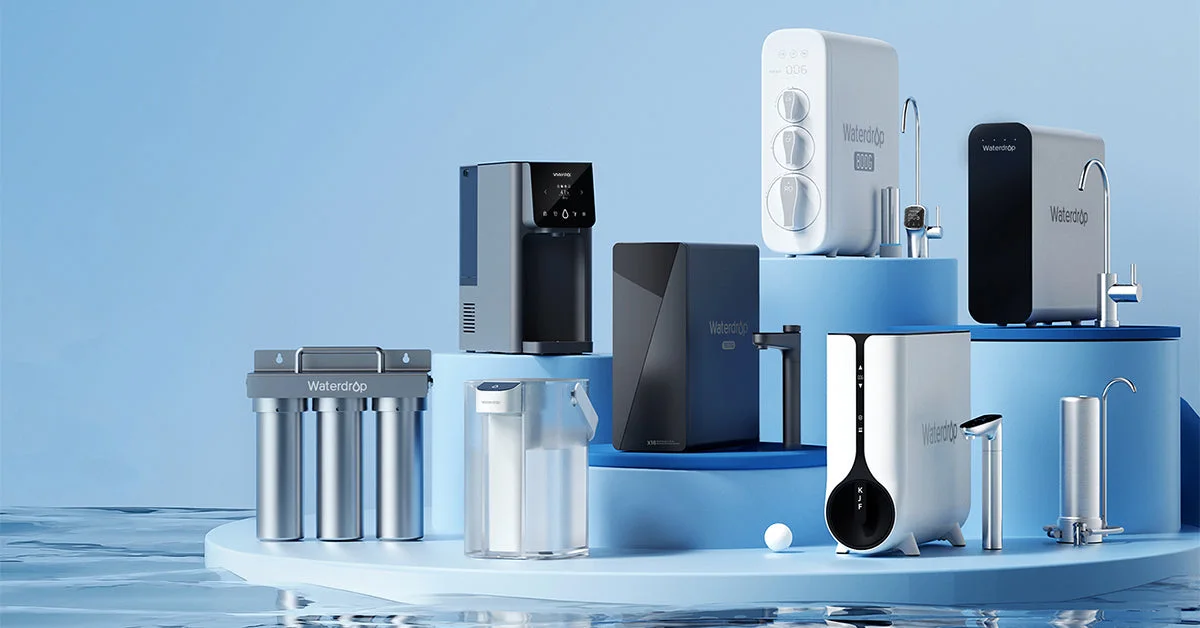
There is a specific kitchen frustration the Waterdrop G3P800 is built to end: waiting for the filter. Tank-based RO systems store water in a pressurized tank, and once it runs dry, you wait minutes for a refill. The G3P800 is tankless — it purifies on demand at 800 gallons per day per its published specifications, which turns “wait for the tank” into “fill the pot now.”
The short verdict: the G3P800 is the fastest, most transparent RO system we cover, with a smart faucet that shows TDS and filter life and an app that tracks usage. It is premium-priced and the installation is a real afternoon project, but for high-volume households it is the most convenient under-sink RO we recommend.
The problem it solves
Tanked RO systems have three pain points: slow refills, hidden filter status, and wastewater nobody can see. The G3P800 addresses all three. The tankless design produces water on demand, so there is no pressurized tank taking up cabinet space and no wait after heavy use. The smart faucet displays total dissolved solids in real time — a concrete “this is working” signal that most RO systems lack. And the companion app tracks water usage and filter life, so you replace cartridges on data rather than guesswork.
The system’s flow rate changes kitchen habits. Filling a pasta pot or a gallon jug goes from a chore to a few seconds, which is the difference between actually using RO water for cooking and falling back to tap.
How it fits into a real home
The G3P800 installs under the sink with a dedicated faucet mounted through the countertop — that is the one permanent step, and it requires either a spare faucet hole or drilling one. The system itself is compact enough for standard cabinets, and once installed, daily life is simple: fill, dispense, glance at the TDS number, and let the app track the filters.
Households that cook a lot get the most value. Coffee, tea, pasta, stock, and even cleaning produce all taste different with RO water, and the on-demand output means nobody waits. The app’s filter tracking also removes the “is it time to change the filter?” debate — the replacement schedule is visible on your phone.
Who should skip it
If you are a renter, the dedicated faucet installation rules the G3P800 out — look at countertop RO options instead. If your water use is modest, a tanked system like the iSpring RCC7 delivers good RO water at a fraction of the price. And if you do not care about app tracking or TDS readouts, you are paying for conveniences you will not use.
Alternatives
For mineralized RO water with high capacity, the Home Master TMAFC-ERP adds an alkaline stage. For a certified countertop alternative, the AquaTru brings NSF-certified claims without installation. Our under-sink guide compares the full field.
Buying advice
The G3P800’s price reflects the flow rate and smart features, so the buying question is volume: if your household refills bottles and pots all day, the premium pays for itself in convenience; if you drink a liter a day, it is overkill. Budget for filter replacements — check current cartridge prices when comparing, since the ongoing cost is the true price of any RO system. Installation is DIY-able for comfortable home tinkerers; otherwise budget for a plumber and count it into the real cost.
Frequently asked questions
How fast is 800 gallons per day in real use?
The published rating indicates the system can produce roughly 800 gallons per day under continuous use — in practice, filling a standard glass or pot takes seconds rather than the minutes a tanked system can require. Actual output depends on incoming water pressure and temperature.
Does the smart faucet require the app?
No — the faucet displays TDS and filter status standalone. The app adds usage history, remote tracking, and filter-life management for those who want it.
How often do filters need replacing?
Waterdrop publishes filter-life guidance and the app tracks usage; typical intervals for RO systems land around 6–12 months for pre-filters and 1–3 years for the membrane, depending on water quality and volume.
How much countertop or cabinet space does it need?
The system mounts under the sink; only the slim faucet appears on the countertop. It is designed to fit standard cabinets, but measure before buying, and confirm you have a faucet hole or are willing to drill one.
Is the installation reversible?
The dedicated faucet is the permanent part — removing the system would leave a faucet hole. That is the main reason this system suits homeowners rather than renters.