The living room smells fine, the windows are closed, and yet someone in the house wakes up stuffy every morning. That scenario is more common than most people think: modern homes seal heat in, and with it carbon dioxide, cooking particles, and volatile organic compounds from furniture and cleaning products. An air quality monitor turns those invisible problems into numbers you can act on — open a window, run a purifier, or call a mitigation company.
This guide covers the monitors we believe deserve attention in 2026, organized by the rooms and problems they fit best. We compare published specifications and real-world fit rather than lab scores, because the right monitor depends entirely on what you want to track and where you want to put it.
What to look for
Sensor set. Not every monitor measures the same pollutants. PM2.5 sensors track fine particles from cooking and wildfire smoke; CO₂ sensors tell you when a room is stuffy; VOC sensors pick up off-gassing; radon sensors need specialized detection chambers. Decide which problem you actually have before you decide on a price.
Display and app. A monitor you can read at a glance gets used; one that only reports through an app gets ignored. Look for a readable display and an app that keeps trends over weeks, not hours.
Connectivity. Wi-Fi monitors push alerts to your phone and let you check readings away from home. Bluetooth-only models are simpler but only useful when you are in range.
Power and placement. Battery-powered units go anywhere, including shelves without outlets. Wired units are more reliable for continuous logging but limit placement.
Running costs. Most monitors have no consumables, but a few sensor types degrade over time. Check whether the manufacturer specifies a sensor lifetime before buying.
The picks
Airthings View Plus
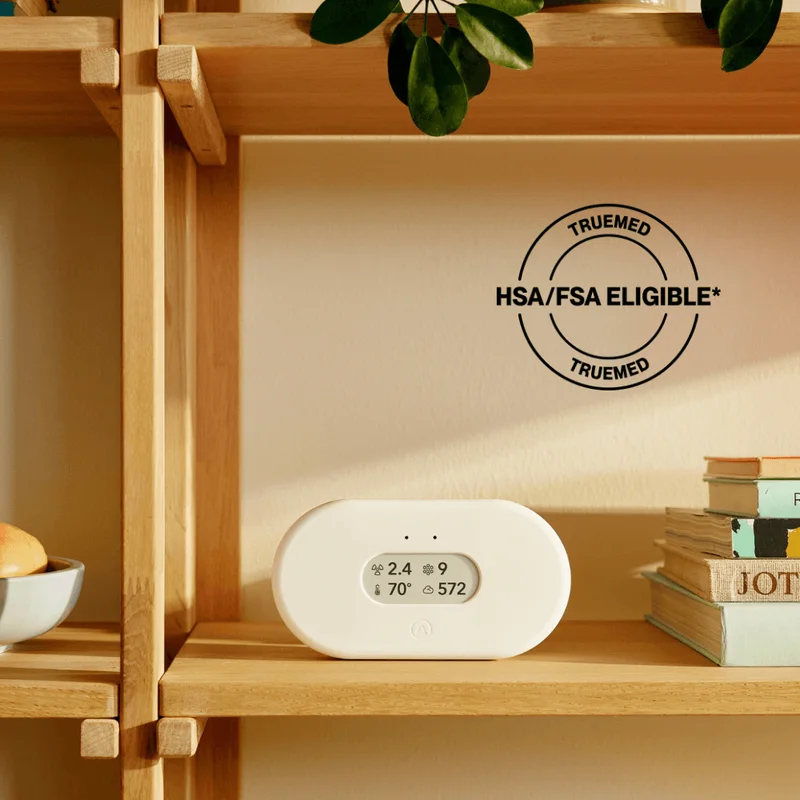
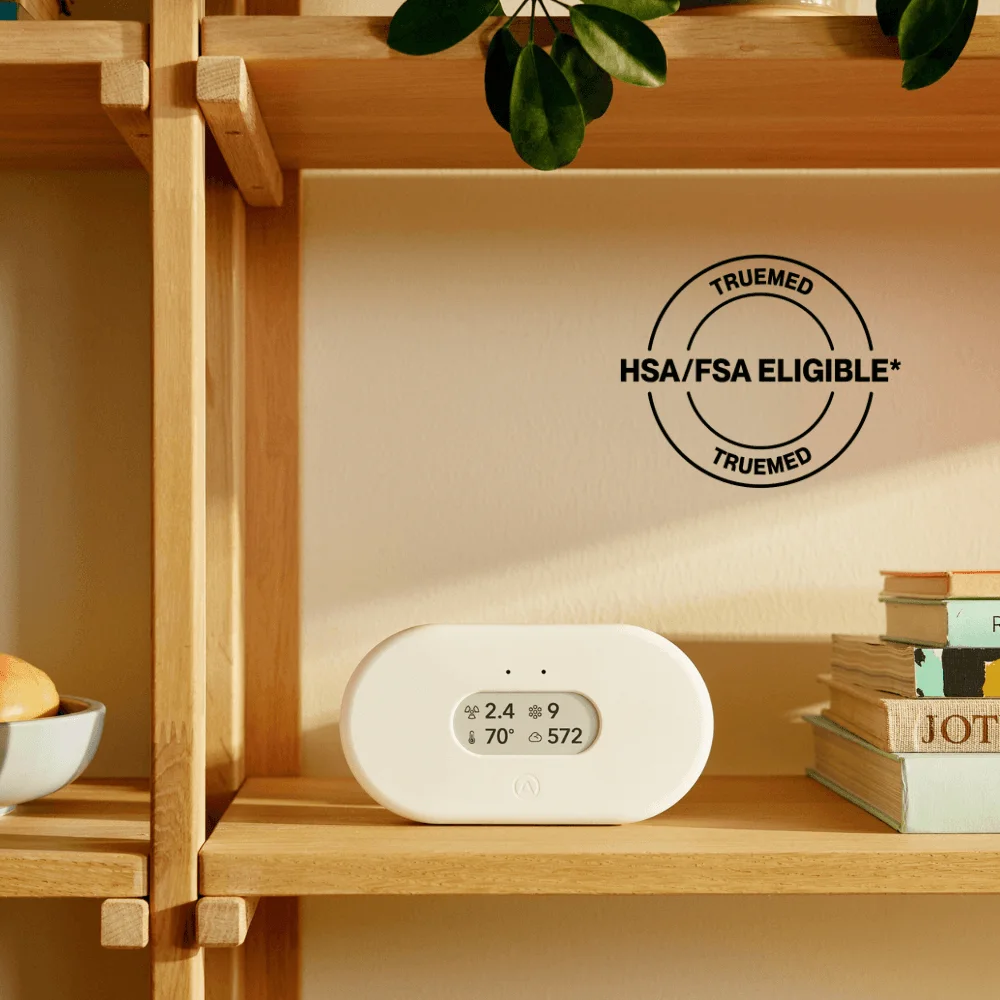
The Airthings View Plus is our pick for households that want one monitor to cover the everyday essentials: radon, PM2.5, CO₂, VOCs, temperature, humidity, and pressure. That breadth makes it ideal for a family room or main hallway where several problems could be hiding. Setup is genuinely simple — battery or USB-C power, then Wi-Fi pairing through the app — and the historical trend view makes it easy to see whether opening a window actually moved the numbers. The tradeoff is the price: you are paying for a multi-sensor instrument, so skip it if you only care about one pollutant.
Aranet4 Home
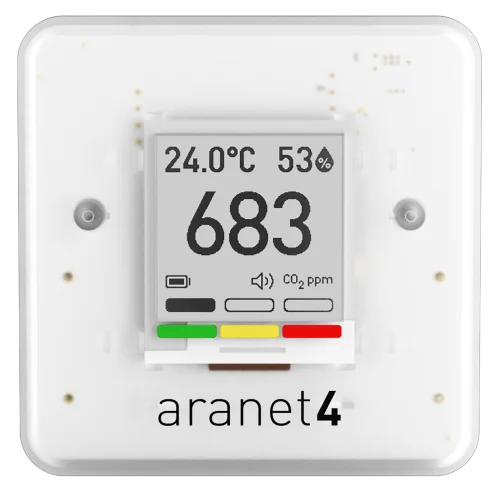
If your main complaint is stuffy rooms, the Aranet4 Home is the cleaner answer. It measures CO₂, temperature, humidity, and pressure, runs for years on two AA batteries, and its E-ink display is readable from across a room. Because it is portable and battery powered, you can move it between a home office, a bedroom, and a classroom without rearranging furniture. It does not measure particles or VOCs, which keeps it focused and affordable.
uHoo Caeli
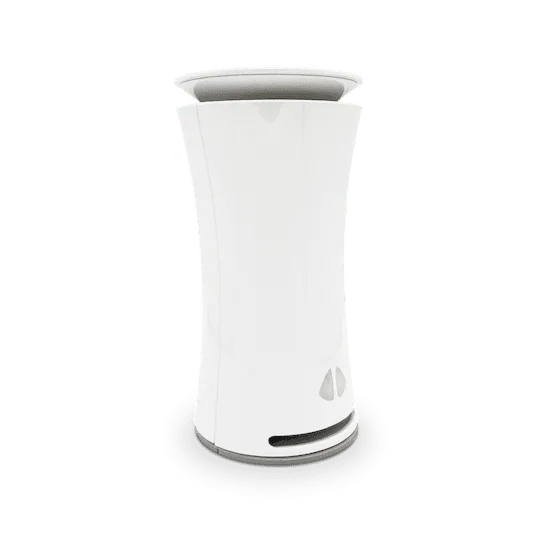
The uHoo Caeli casts the widest net, with sensors for CO₂, TVOC, PM2.5, PM10, temperature, humidity, and more. Its strength is depth: detailed trends, thresholds, and exportable reports make it useful for households managing asthma or allergies. It is wired only, so plan for a power outlet where you want it to live. Buyers who want a “set it and forget it” device may find the data overkill.
IQAir AirVisual Pro
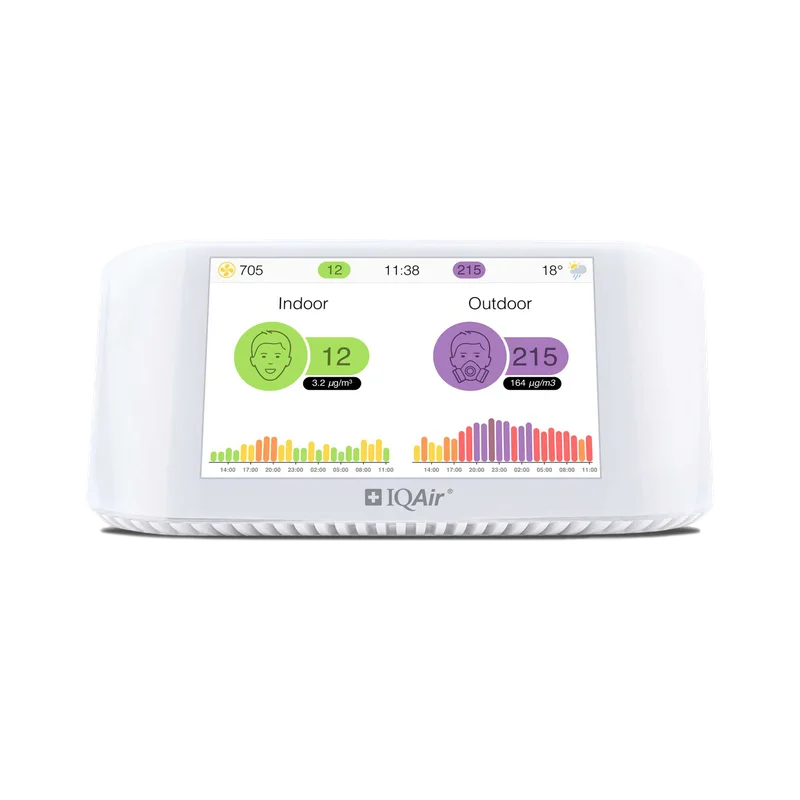
For particle-focused households — wildfire season, urban pollution, or a room near a busy road — the IQAir AirVisual Pro is the pick based on its laser-based PM2.5 and PM10 measurement and clear AQI display. It also shows CO₂, temperature, and humidity, and it includes a five-year air quality forecast in the app. It carries a premium price and does not measure VOCs or radon.
Temtop M2000 2nd Gen
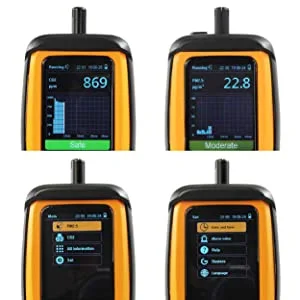
The Temtop M2000 2nd Gen is the budget entry point that still feels like a real instrument. It measures PM2.5, PM10, AQI, temperature, and humidity with a one-button interface and a rechargeable battery small enough for a backpack. It is best for a first-time buyer who wants to start tracking particles without a big commitment, and it doubles as a travel spot-check tool.
Real-world usage scenarios
Home office: A CO₂-heavy room makes afternoons sluggish. Place an Aranet4 Home on the desk; when readings climb toward 1,000 ppm, crack a window for five minutes. You will notice the difference within a day.
Kitchen and living area: Cooking generates particles and VOCs that linger. A wall-mounted Airthings View Plus near the kitchen opening shows the spike after searing and tells you when the range hood actually cleared the air.
Nursery or bedroom: Keep the display dim and the device away from the crib. A PM2.5-capable monitor helps you notice when the room air degrades during the night, which is useful for families dealing with allergies.
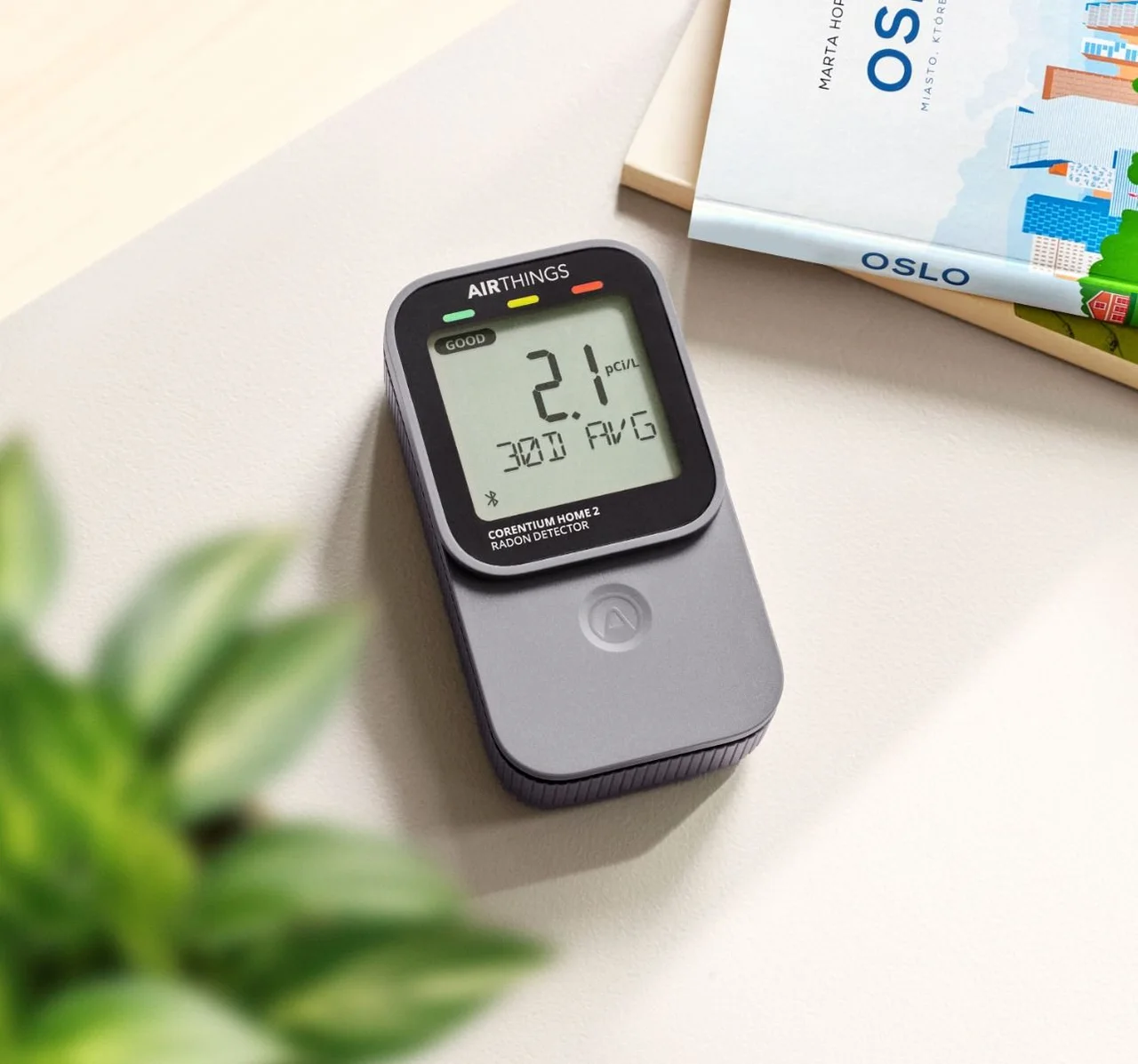
Basement: Radon accumulates in low, poorly ventilated spaces. A monitor with a radon sensor is the only consumer option that tracks it continuously, so you catch seasonal changes rather than a single snapshot.
Buying advice
Start by naming the problem: stuffiness, particles, or radon. That single decision narrows the field more than any feature list. Buy one monitor for the room where you spend the most time rather than sprinkling cheap devices everywhere — a single accurate reading is more actionable than five vague ones. Do not overpay for sensors you will not use; a radon-capable monitor is wasted money if you have already mitigated and confirmed your home is low. Watch for sale periods on the premium models, since multi-sensor monitors are frequently discounted. And check the manufacturer’s stated sensor lifetime, because a monitor is only as good as its oldest sensor.
Frequently asked questions
Which air quality monitor is best for a bedroom?
For a bedroom, prioritize a quiet, battery-powered monitor with a display that can dim. The Aranet4 Home fits well for CO₂ and humidity, while the Airthings Wave series or View Plus adds radon and particle tracking if you want broader coverage.
Do air quality monitors need calibration?
Most consumer monitors use sensors that are calibrated at the factory and drift slowly over years. Some models let you recalibrate CO₂ readings in fresh air. Follow the manufacturer's guidance and expect to replace the unit when its stated sensor lifetime ends.
Can one monitor cover the whole house?
Air quality varies room to room, so a single monitor only tells you about its immediate surroundings. Place it in the room where you spend the most time, and consider a second portable unit for rooms that change throughout the day.
Are cheap air quality monitors accurate?
Lower-cost monitors are usually fine for spotting trends and relative changes but less reliable for absolute measurements, especially particles. Read the published sensor specifications and treat any consumer monitor as a screening tool rather than a laboratory instrument.
How quickly do readings change after opening a window?
CO₂ and VOC readings usually respond within minutes to a few minutes of fresh air. Particle readings respond faster in the direction of the airflow, so place the monitor away from direct drafts for a representative reading.