The meeting room fog, the afternoon slump in the home office, the classroom that feels heavy by third period — most of the time, the culprit is CO2. Exhaled carbon dioxide builds up in closed rooms, and sustained levels are a well-documented sign of poor ventilation. A CO2 monitor turns that invisible buildup into a number you can react to, which is why they became standard gear in offices and classrooms and are increasingly common in homes.
This guide covers the best CO2 monitors we recommend for different spaces, from a battery-powered portable you can move between rooms to multi-sensor stations that track CO2 alongside particles and radon.
What to look for
- Sensor type. NDIR (non-dispersive infrared) sensors are the technology to prefer for CO2; they are accurate and stable, and they self-calibrate against fresh air. Cheaper electrochemical or “virtual” sensors drift more.
- Display. The whole point is at-a-glance feedback. Look for a readable display with color cues (green/yellow/red) so you can react without studying numbers.
- Power and portability. Battery-powered models with e-ink displays last for years and move freely between rooms; mains-powered monitors are locked to outlets but often add more sensors.
- Alerts and history. A loud or app-based alert helps in classrooms and offices. Local history in the app matters if you want to spot weekly patterns.
- Connectivity. Bluetooth-only models sync locally and need no network; Wi-Fi models push alerts and history to your phone. Neither is inherently better — it depends on whether you want remote access.
- Extra sensors. Some CO2 monitors bundle PM2.5, VOC, temperature, and humidity — or even radon. Pay for extras only if you will use them.
The picks
Aranet4 Home — best portable CO2 monitor
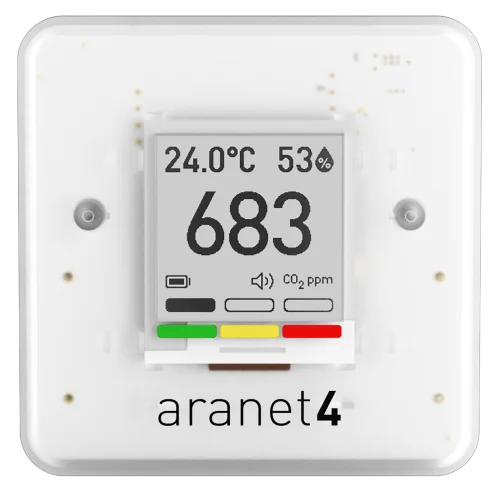
The Aranet4 is the monitor we recommend for most home offices and classrooms first. Its NDIR sensor is a proven technology class, the e-ink display is readable from across a room, and battery life is measured in years, not weeks. It syncs to the free app over Bluetooth for about 90 days of history. The tradeoff: no particles, no VOCs, and no Wi-Fi alerts — this is a focused CO2 tool, and it is excellent at that job. Anyone who wants multi-pollutant coverage should look at the next pick instead.
Airthings View Plus — best multi-sensor smart monitor
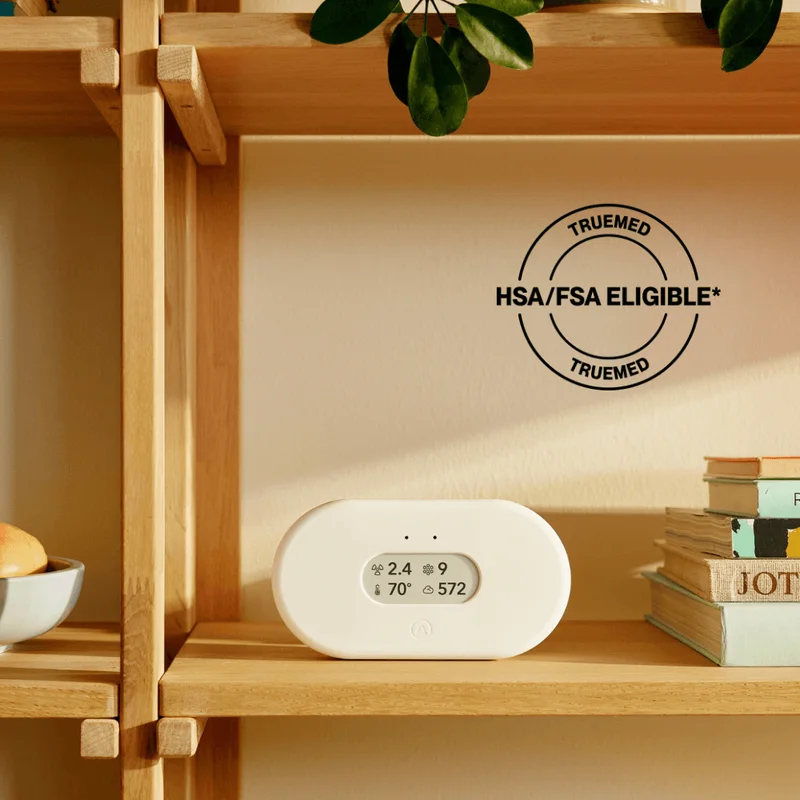
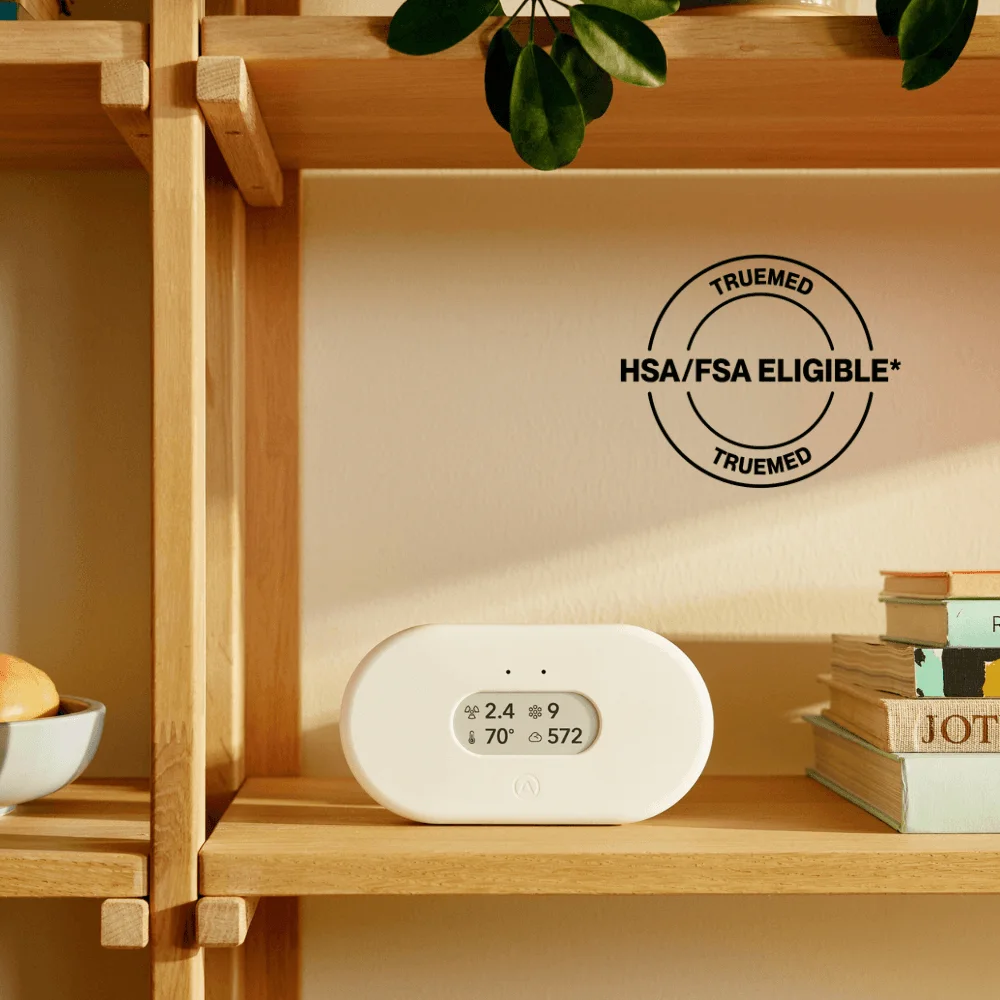
If CO2 is one concern among several — say, you also want radon peace of mind and particle trends — the Airthings View Plus bundles CO2 with PM2.5, VOCs, radon, temperature, humidity, and pressure in a battery-powered Wi-Fi device. Its app history makes it easy to spot the CO2 pattern in your bedroom or office. The premium price and the fact that most people will not use all seven sensors are the reasons it is not the default pick for pure CO2 duty.
Temtop M2000 2nd Gen — best budget option
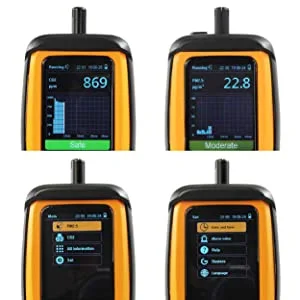
Budget buyers get real CO2 data from the M2000 2nd Gen’s sensor array, alongside PM2.5, PM10, AQI, temperature, and humidity, in a rechargeable portable meter. It is not as refined as the Aranet4, and its app is basic, but as a first monitor for a rental or a workshop it delivers dependable readings at a friendly price. Our full Temtop M2000 review covers the details.
EcoQube Air — best display-focused multi-sensor pick
For living rooms where the monitor is part of the decor, the EcoQube Air pairs a broad sensor set — CO2, PM2.5, VOC, temperature, and humidity per its published specs — with a crisp OLED display and Wi-Fi app. It is a premium-looking device with a premium price, and its VOC and CO2 numbers are estimates rather than lab-grade, but for households that want a beautiful, complete monitor in the main living space, it is a strong contender.
Real-world usage scenarios
- The home office. Put a portable CO2 monitor on the desk and crack a window when it crosses the 1,000— ,500 ppm range. Many workers find their afternoon slump is partly a ventilation problem.
- The classroom. A visible color-coded display at the front of the room gives the teacher a cue to open windows between classes. Schools often deploy these as part of ventilation audits.
- The bedroom. CO2 climbs all night in a shut room. A quiet monitor with app-only alerts (no bright screen) lets you check the morning reading without disturbing sleep.
- The meeting room. In shared offices, a wall-mounted display tells everyone when the room needs air — the cheapest productivity fix most offices never try.
Buying advice
Set your budget by room count, not feature list. One portable monitor can serve several rooms if you move it; multiple fixed monitors make sense only when the app history across rooms is worth it. Do not overpay for Wi-Fi if you will be in the same room as the monitor — Bluetooth history suffices for most homes. NDIR sensors auto-calibrate, so skip any model that requires paid calibration services. Watch for back-to-school and office-season sales, when CO2 monitors are frequently discounted.
Frequently asked questions
What CO2 level should I ventilate at?
Outdoor air typically reads 400–450 ppm. Many organizations treat sustained readings above 1,000 ppm as a signal to increase ventilation, with levels far above that becoming a stronger concern. Check the guidance relevant to your country or workplace for specific thresholds.
How do NDIR sensors stay calibrated?
NDIR sensors self-calibrate against fresh air: when the device sees outdoor-quality air, it resets its baseline automatically. Keeping the monitor in regularly ventilated rooms supports this process, so no manual calibration is normally needed.
Can a CO2 monitor detect smoke or particles?
Only if it has a particle sensor. A pure CO2 monitor measures ventilation quality, not smoke, dust, or chemicals. Choose a multi-sensor model if you need both.
Is high CO2 dangerous?
Typical indoor CO2 levels cause discomfort, drowsiness, and impaired concentration rather than acute danger. Extremely high levels are a different matter — if you suspect a gas leak or combustion problem, evacuate and contact emergency services.
How many monitors do I need?
One monitor covers one room. Start with the room you occupy most — usually the home office or bedroom — and add devices where symptoms like stuffiness or morning headaches actually occur.