Radon is the invisible home-safety issue that testing alone can’t fully resolve. A test kit tells you today’s snapshot; a continuous monitor tells you what your basement does across seasons, weather systems, and after mitigation. For homeowners who live above finished basements or in regions with elevated radon risk, a continuous detector turns an annual worry into a number you can check like a thermostat.
This guide compares the continuous radon monitors we recommend most, plus the role test kits still play. All claims are based on published specifications and real-home placement considerations, not lab tests we performed.
What to look for
- Sensor technology. Consumer radon monitors use passive alpha detection or ionization chambers. Both track trends well; the key is stable, long-term data rather than instant precision.
- Response time. Some monitors update in minutes (useful for post-mitigation checks), others smooth readings over hours. Decide whether you need quick reaction or long-term averages.
- Power and placement. Battery models can sit anywhere — including a crawl-space shelf. Mains-powered options are rarer in this category, so battery life is usually the deciding factor.
- App and history. If you want to compare this month to last month, an app with graphs matters. Display-only monitors are simpler but forget history.
- Extra sensors. Radon monitors increasingly bundle CO2, VOCs, and particles. That is convenient, but it raises price — and the radon sensor quality is what matters most here.
- Certification expectations. Continuous monitors are for personal tracking. Real-estate transactions and formal assessments rely on lab-analyzed test kits, not consumer devices.
The picks
Airthings View Plus — best all-rounder with radon
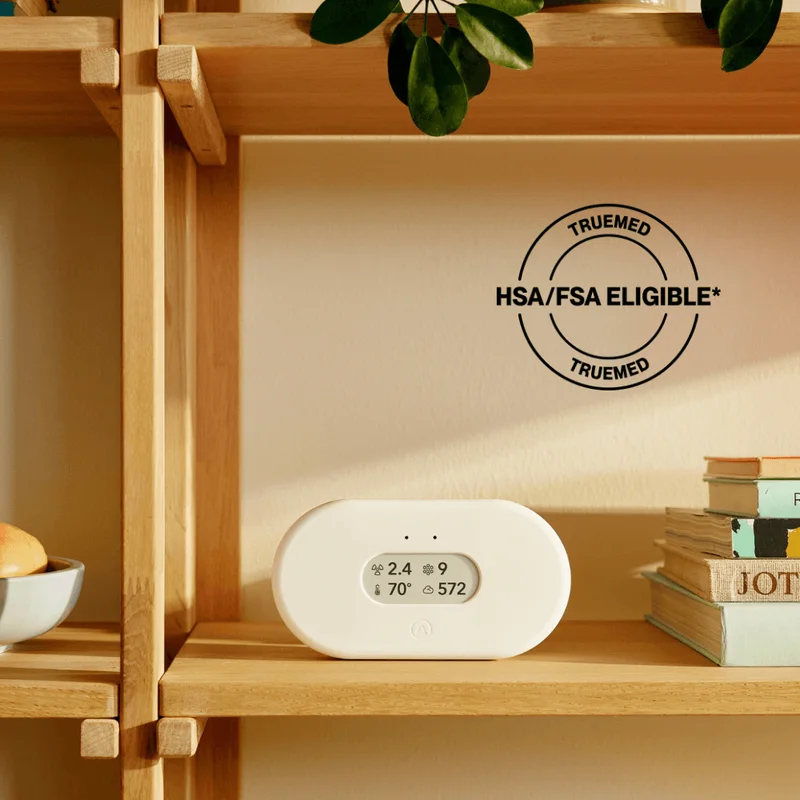
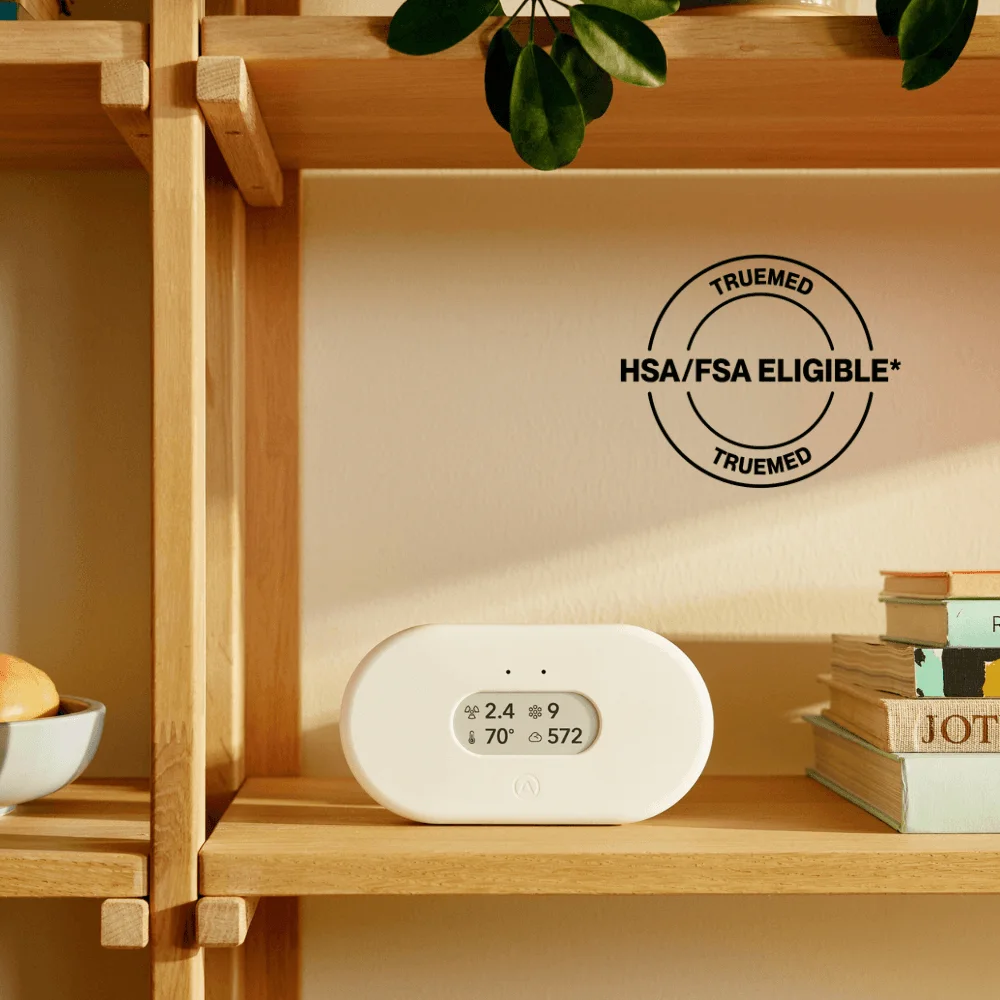
The Airthings View Plus is the pick for households that want radon tracking without giving up everyday pollutant data. It adds PM2.5, CO2, VOC, temperature, humidity, and pressure sensors to radon detection, runs on batteries for up to about two years per the manufacturer, and keeps clean trend history in the app. It is the most expensive option here, and its radon data is for trends rather than formal reporting — but it is the only single device that answers “is my basement safe” and “why does the office feel stuffy” at once.
Airthings Corentium Home 2 — best no-fuss radon monitor
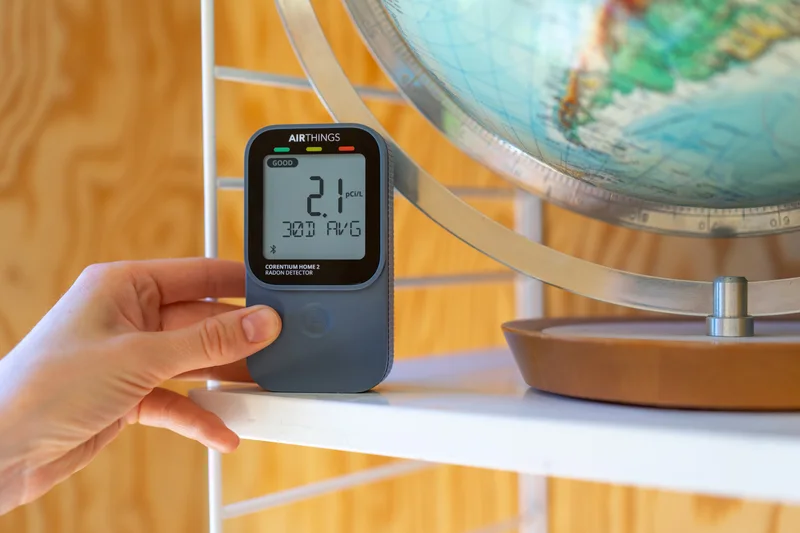
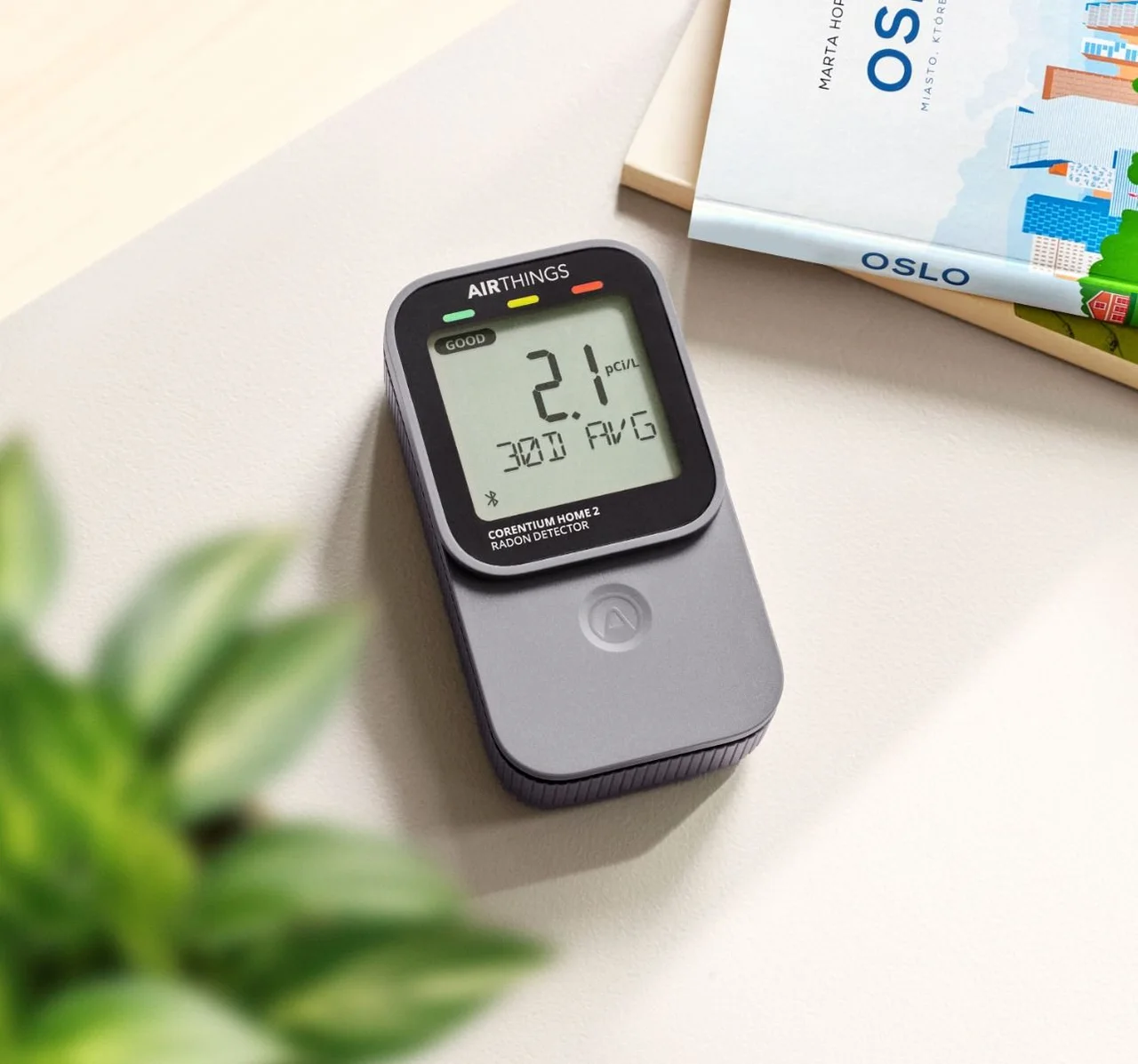
The Corentium Home 2 is the classic answer for buyers who want radon tracking and nothing else. It is display-only — no app, no account, no setup — and battery powered for one to two years per the manufacturer, showing short and long-term averages on its screen. It is the simplest device on this list, which is exactly why many homeowners choose it. The tradeoff: no alerts, no history beyond the display, no other pollutants.
RadonEye RD200 — best quick-response monitor
For verifying mitigation work or screening a specific space, the RadonEye RD200 from Ecosense is built for faster feedback. Its pulsed ionization sensor updates readings frequently, and the Bluetooth app shows hourly data and graphs. It is compact, radon-focused, and simpler than a full multi-sensor station. The catch is that detailed history lives in the app, and quick response can mean noisier short-term numbers — let it average over time before drawing conclusions.
Aranet Radon Plus — best for smart-home setups
The Aranet Radon Plus pairs an ionization-chamber radon sensor with temperature, humidity, and pressure tracking, an e-ink display, and unusually good smart-home support — including cloud data and Home Assistant integration per its published specs. For households that already run a smart-home setup, it is the easiest radon monitor to weave into dashboards and automations. It carries a premium price and is not available in every region, so check local availability before planning around it.
Real-world usage scenarios
- The finished basement. The classic radon zone. A continuous monitor on the rec-room shelf gives you year-round data instead of one seasonal snapshot.
- After mitigation. If a mitigation system was installed, a quick-response monitor like the RadonEye confirms the system is working in the days after installation — then stays on watch for drift later.
- The crawl space. Battery-powered, display-only monitors are the practical choice where there is no power and no desire to check an app.
- Pre-sale checks. For a home you are buying or selling, skip the consumer monitors for the formal record: use a lab-analyzed short-term test kit alongside your continuous tracking.
Buying advice
Decide first whether radon is your only concern. If it is, a dedicated monitor like the Corentium Home 2 costs less and does the job simply. If you want one device for the whole air picture, the View Plus is worth the premium. Do not buy a radon monitor based on response speed alone — radon levels fluctuate naturally, and long-term averages matter more than a fast number. Prices in this category are stable, so buy when you are ready rather than waiting for sales; the bigger decision is placement, which should be the lowest level of the home you regularly use.
Frequently asked questions
What is the difference between a radon detector and a test kit?
A continuous detector shows ongoing levels and trends; a lab-analyzed test kit gives a certified snapshot used for formal decisions like home purchases. Most homeowners use a kit first, then add a continuous monitor to track the result over time.
How long does a continuous monitor take to be accurate?
Monitors stabilize after a day or two and become increasingly reliable as averages accumulate. Short-term readings fluctuate, so base decisions on 24-hour or longer averages rather than single numbers.
What radon level is considered elevated?
Action levels vary by country and agency — the US EPA recommends action at 4 pCi/L (148 Bq/m³), while many authorities use lower thresholds. Check the guidance for your region and consult a qualified radon professional when levels approach or exceed the local action level.
Do these monitors need maintenance?
Consumer radon monitors are essentially maintenance-free beyond battery changes. Sensors have a service life measured in years; the manufacturer's documentation includes guidance on expected sensor longevity.
Can I use a monitor instead of a professional test?
For personal awareness, yes — monitors are excellent for trends. For a legal, insurance, or real-estate decision, use a lab-analyzed test from an accredited lab, as most transactions require a documented result.