The same air quality problems that show up at home show up on the road — smoky campgrounds, stuffy van cabins, unfamiliar hotel rooms with who-knows-what in the ventilation. A portable air quality monitor fits in a backpack, runs for weeks on a charge or years on batteries, and answers the questions a traveler actually asks: is this hotel room stuffy, is the campfire smoke drifting into the tent, should I open the van windows?
Here are the two portable monitors we recommend most, chosen for size, battery life, and practical readings rather than feature sprawl.
What to look for
- Battery life. Travel is where the power math changes. A monitor that needs nightly charging is a chore; one that lasts months to years on a charge or batteries is gear you can forget.
- Size and weight. It has to live in a backpack pocket without arguing with the rest of your kit.
- Readable without an app. On a campsite, you want the number on the screen — not a phone-dependency. An offline display is a genuine feature.
- Sensor relevance. CO2 matters in vans and closed cabins; PM2.5 matters at smoky campsites and near fires. Pick based on your trips, not the spec sheet.
- Durability expectations. Portable monitors are not ruggedized phones — treat them as sensitive instruments and keep them dry.
The picks
Temtop M2000 2nd Gen — best budget all-round portable
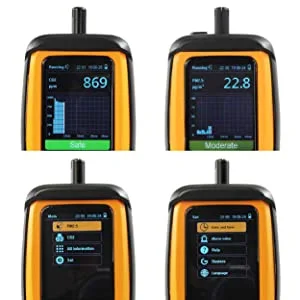
The Temtop M2000 is our travel default: rechargeable, pocket-sized, and capable of PM2.5, PM10, AQI, temperature, and humidity readings with a screen that works without an app. It is the monitor you throw in a bag before a camping trip to check campfire smoke, or carry to a hotel to spot-check a stuffy room. The battery needs charging rather than lasting years, and the app is basic — but for portable particle data at a friendly price, it is the most practical pick.
Aranet4 Home — best battery life for CO2-focused travel
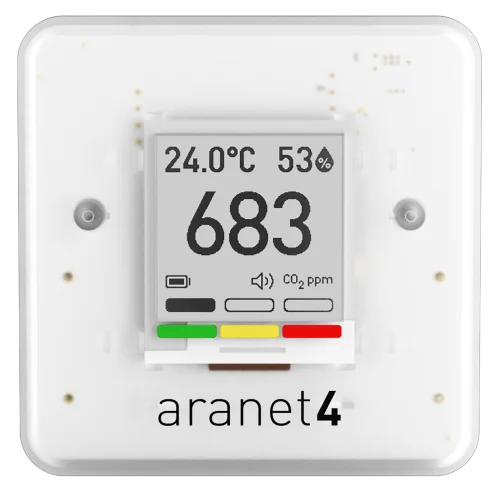
The Aranet4 inverts the power tradeoff: its e-ink display and NDIR CO2 sensor run for years on AA batteries per the manufacturer, making it the set-and-forget companion for van life and long trips. It measures CO2, temperature, humidity, and pressure — perfect for deciding when a closed van cabin needs air — and the app stores about 90 days of history over Bluetooth. It has no particle sensor, so smoky environments are outside its job description.
Real-world usage scenarios
- Campfire season. A PM-capable monitor on the picnic table tells you when smoke has drifted into the sleeping zone — useful for families with kids or anyone with respiratory sensitivity.
- Van and camper life. CO2 climbs fast in a sealed van at night. An Aranet4 on the dash gives you the ventilation cue that keeps mornings clear-headed.
- Hotel rooms. Check the room before settling in: CO2 in tightly sealed hotel rooms can climb overnight, and the answer is usually opening a window or running the bath fan.
- Work trips. A pocket monitor turns the “this conference room is awful” complaint into a number, and it travels in a laptop bag.
Buying advice
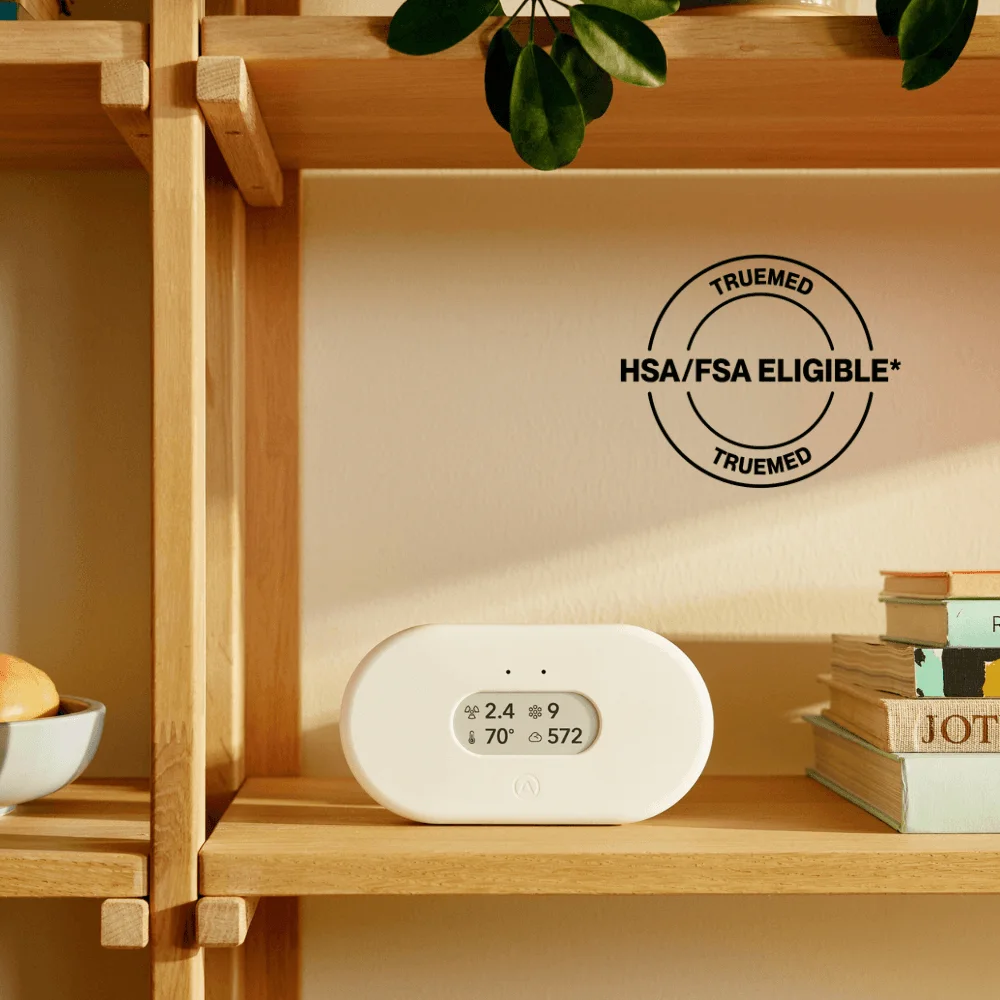
Choose the sensor that matches your dominant trips. Smoke and dust concerns point to the Temtop’s particle coverage; closed-cabin ventilation points to the Aranet4’s CO2 focus and battery life. Do not pay for a full home-monitor feature set you will never open in a tent. Both picks are stable in price, so the real decision is sensor fit, not timing. If you camp in heavy smoke regions, consider pairing the portable particle monitor with a home PM2.5 monitor for the spaces you return to.
Frequently asked questions
Are portable monitors accurate?
Consumer portable monitors use the same sensor technologies as home units — NDIR for CO2, laser counters for particles — and are accurate enough for trends and comparisons. For lab-grade numbers, you would need professional instruments.
Can I use one monitor for travel and home?
Yes. A portable monitor can double as a spot-checker at home — moving between the kitchen, bedroom, and office — though it will not build the continuous per-room history a fixed monitor provides.
How do I charge the Temtop on a trip?
It charges over USB like a phone, so a power bank or car adapter handles it. Charge it before departure and top it up every few days of heavy use.
Does the Aranet4 work offline?
Yes, completely. It needs no network for readings; Bluetooth syncs history to the app when you are nearby. There is no cloud account involved.
What about extreme temperatures?
Keep both monitors in their rated operating ranges — they are indoor instruments, not weatherproof gear. In freezing conditions, protect them from condensation and direct exposure.