Allergy season and wildfire season have one thing in common: fine particles. PM2.5 — particles smaller than 2.5 microns — is the pollutant that drives smoke advisories, triggers air purifier purchases, and shows up in your throat on hazy days. A PM2.5 monitor tells you what is actually in the air inside your home, where you spend the most time, and whether that air purifier is earning its keep.
Here are the particle monitors we recommend across budgets, based on published specifications and the scenarios where each one earns its place.
What to look for
- Sensor type. Laser particle counters are the technology to prefer — they are generally more consistent than older light-scattering designs. Sensor quality is the difference between useful trends and a gadget that bounces between numbers.
- Display. During smoke events you want an at-a-glance answer. A clear display with color-coded AQI beats an app you must open.
- Placement flexibility. Battery models can move to the bedroom at night and the kitchen during cooking; wired models stay put.
- Alerts and history. App alerts matter when you are away — or when you want to know what happened at 6 p.m. while you cooked.
- Extra sensors. PM monitors often bundle CO2, VOCs, humidity, and temperature. Choose based on your other concerns, not the spec sheet’s length.
The picks
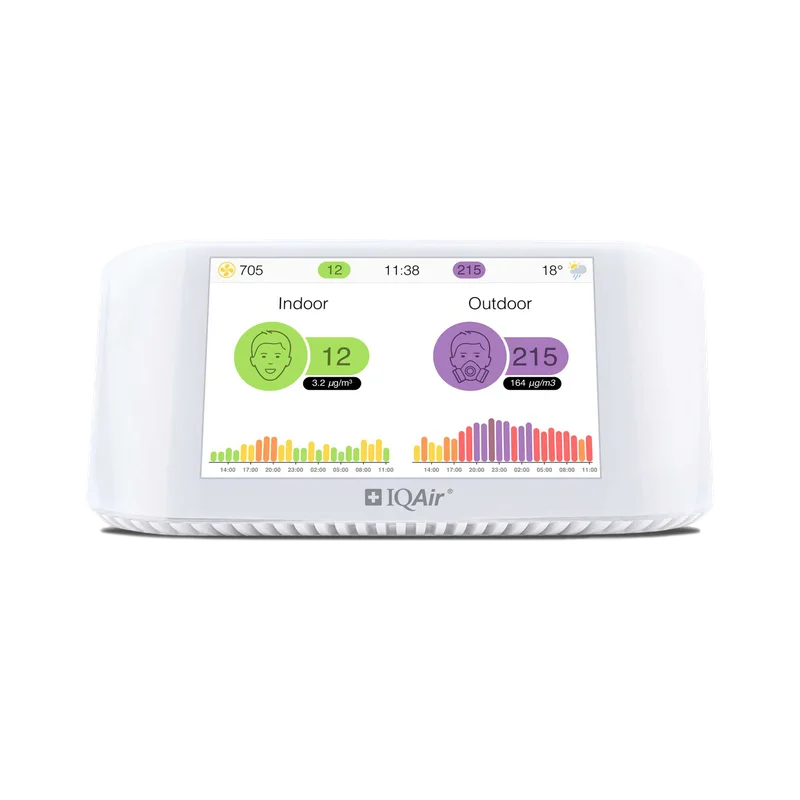
IQAir AirVisual Pro — best particle accuracy
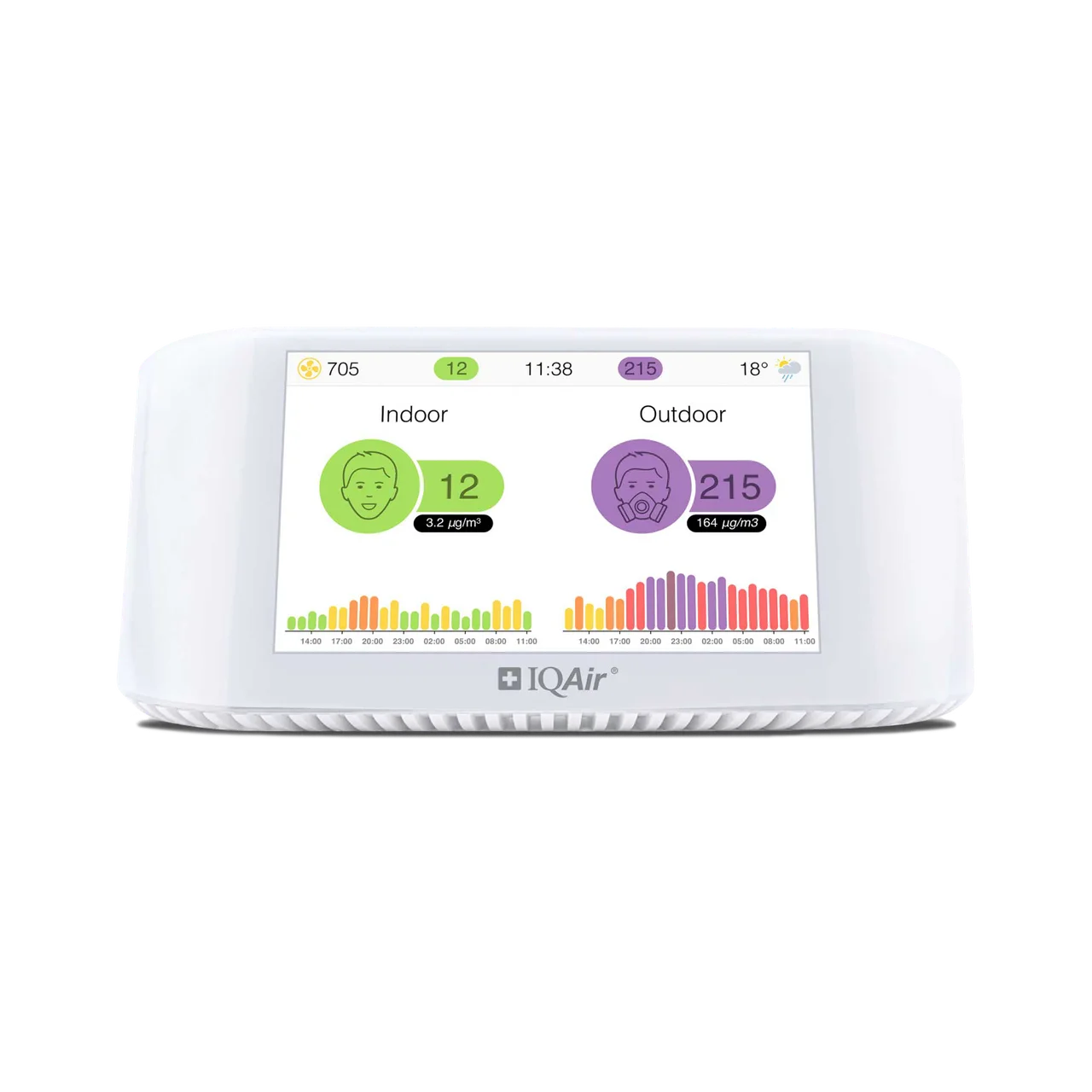
The AirVisual Pro is built around a laser particle counter and a large, forecast-aware display. During wildfire season, its blend of indoor readings and outdoor AQI forecasts answers the daily question — should I open the windows — better than any other monitor we cover. The cost is premium, and it lacks VOC and radon sensors, but if particles are your primary concern, this is the benchmark.
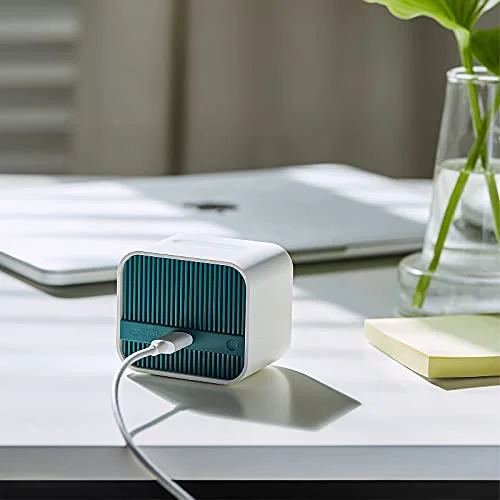
Qingping Air Monitor Lite — best budget display
Budget buyers get a genuinely clear picture from the Qingping Air Monitor Lite: PM2.5, temperature, and humidity on a large e-ink display, with optional Wi-Fi and app data. It is one of the most affordable particle monitors with a display you can read across the room, which makes it a natural fit for bedrooms and nurseries. It skips CO2, VOCs, and radon — but for pure particle visibility at a low price, it is hard to beat.
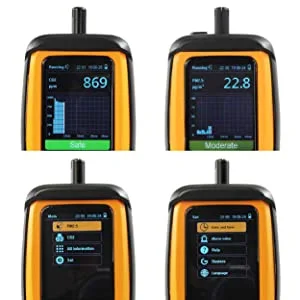
Temtop M2000 2nd Gen — best portable budget meter
The Temtop M2000 covers PM2.5, PM10, AQI, temperature, and humidity in a rechargeable portable meter. Its strength is versatility: check a rental, spot-check the workshop, or compare rooms in one afternoon. The app is basic and there is no CO2 sensor, but as a first particle meter it is the most practical entry point.
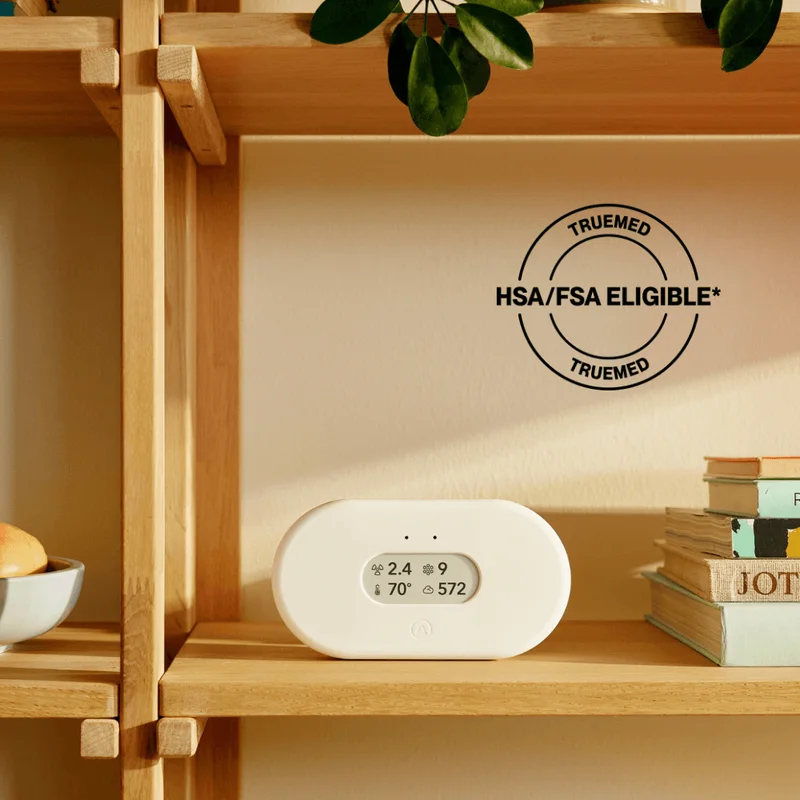
Airthings View Plus — best all-rounder with particles
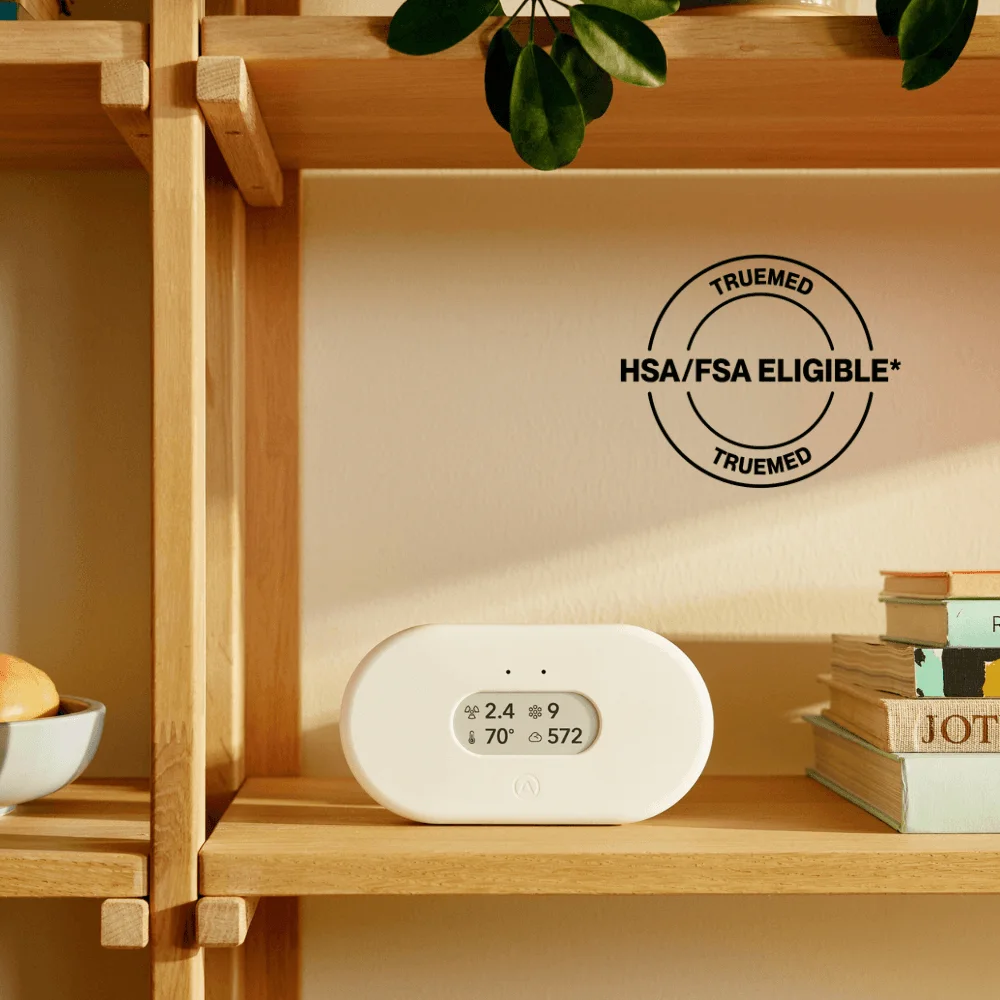
For households that want particle tracking plus CO2, VOCs, and radon, the Airthings View Plus is the one-device answer. Its particle readings power useful trends in the app, and the battery-powered design means you can put it anywhere — including the nursery. It is the priciest pick here, and its particle sensor is not in the same class as the AirVisual Pro’s laser counter, so particle-first households should weigh that tradeoff.
Real-world usage scenarios
- Wildfire season. Put your most accurate monitor in the room you occupy most and cross-check indoor readings against outdoor AQI before opening windows. This is where the AirVisual Pro’s forecast integration earns its price.
- The kitchen. Cooking is the biggest everyday source of PM2.5 in most homes. A monitor on the counter shows whether the range hood actually clears the smoke — most people are surprised by the answer.
- Allergy season. Track particles through the day and correlate spikes with window-opening habits, vacuuming, and pet zones. The data often points at a fix you had not considered.
- The nursery. A quiet-display monitor with app-only alerts gives parents particle and humidity data without a bright screen at bedtime.
Buying advice
Match the monitor to the season, not the specs. If wildfire smoke is a real annual event in your region, spend on accuracy (laser counter) and forecast features. If you just want to learn about your home’s air, a budget meter teaches you 90% of the lesson for a fraction of the price. Do not overpay for app features you will not use, and remember placement is free: a monitor in the wrong room tells you nothing about the right one. Prices drop around fall and spring sales, so wishlist your pick if you can wait.
Frequently asked questions
What is a safe PM2.5 level?
Air quality agencies publish hourly and annual PM2.5 guidelines, and they differ by region. The AQI scale used by monitors is a practical shorthand: green and yellow are better, orange and red warrant caution, especially for sensitive groups. Check your local authority's guidance for thresholds.
Do PM2.5 monitors need calibration?
Consumer particle monitors are generally maintenance-free, though sensors do drift over years — another reason to read them as trend indicators. Keep intake vents clear and follow the manufacturer's cleaning guidance.
Can a PM2.5 monitor detect mold or allergens?
It detects particles, which include dust and smoke, but not specific allergens or mold spores by type. Humidity data on many monitors helps flag mold-friendly conditions, but mold identification requires testing or professional inspection.
How do I know if my air purifier is working?
Place the monitor in the same room as the purifier and compare readings with it on and off over a few days. A working purifier should produce clearly lower particle readings during smoke or cooking events.
Should I measure indoors or outdoors?
Both, if you can — indoor readings guide purifier and ventilation decisions, while outdoor AQI tells you when to close windows. If you can only afford one, measure indoors where you spend most of your time.