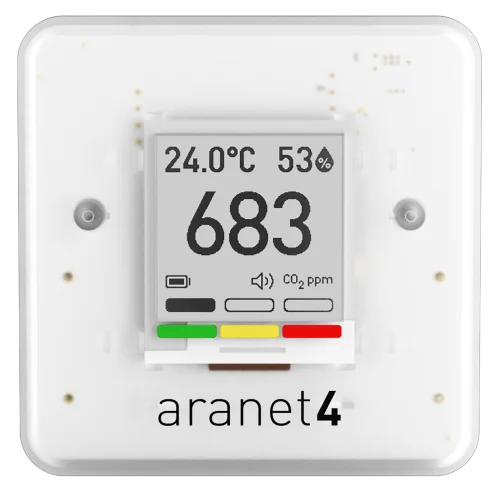
There is a moment every home-office worker knows: the afternoon fog. By 3 p.m. the room feels heavy, focus slips, and you crack a window out of habit. An Aranet4 Home — a pocket-sized CO2 monitor with an e-ink display — is the device that explains that fog with a number, and it does so for years on a single set of batteries.
The short verdict: the Aranet4 Home is the best dedicated CO2 monitor we cover, based on its published specifications — an NDIR (non-dispersive infrared) sensor, a battery life measured in years, and a display you can read across the room. It does not measure particles or VOCs, and it is Bluetooth-only, but for the single most useful indoor-air number in occupied rooms, it is outstanding.
The problem it solves
CO2 is the best cheap proxy for ventilation quality. When a room is occupied and windows stay shut, exhaled CO2 builds up to levels that correlate with drowsiness and poor concentration. The problem is that people are terrible at noticing it — the feeling creeps in gradually. The Aranet4’s color-coded display and optional alarm make the invisible visible: green under 1,000 ppm, yellow as it climbs, red when the room genuinely needs air.
What separates the Aranet4 from cheaper meters is its sensor quality and endurance. The NDIR sensor is the same technology class used in professional CO2 meters, readings update reliably, and the e-ink screen sips power instead of draining it. The manufacturer rates battery life in years rather than weeks, which means you can treat it like a thermometer: put it on a desk and forget it.
How it fits into a real home
The Aranet4 is designed to travel between rooms. It is small enough for a backpack, which makes it genuinely useful across the spaces a household actually occupies: the home office during the workday, the nursery or bedroom at night, the classroom or music room on weekends. The app stores about 90 days of history and shows CO2 graphs, so you can check whether that stuffy-feeling guest room actually crosses 2,000 ppm when the door is shut.
Two practical details make it easy to live with. First, the display always shows the current reading without waking anything — no button, no app. Second, the low power draw means no charger hunting; you set it up once and replace batteries in a different season.
Who should skip it
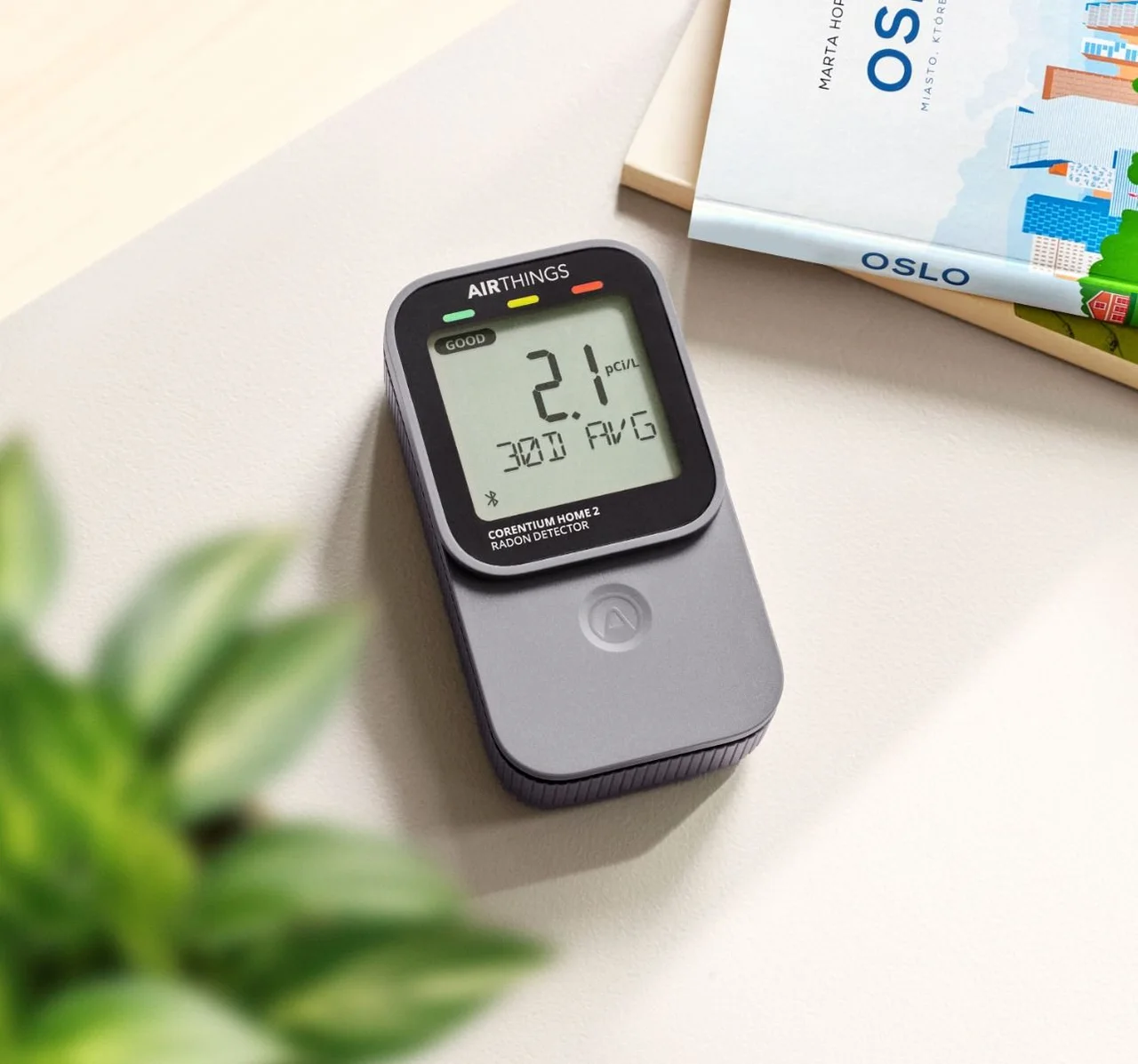
If your concern is wildfire smoke or dust rather than stuffy rooms, the Aranet4 has no particle sensor and is the wrong tool. If you want continuous monitoring while you are away from home — checking the office air from the train — the Bluetooth-only connection means data only syncs when the app is nearby. And if you want radon coverage, this is not that device; pair it with a radon monitor instead.
Alternatives
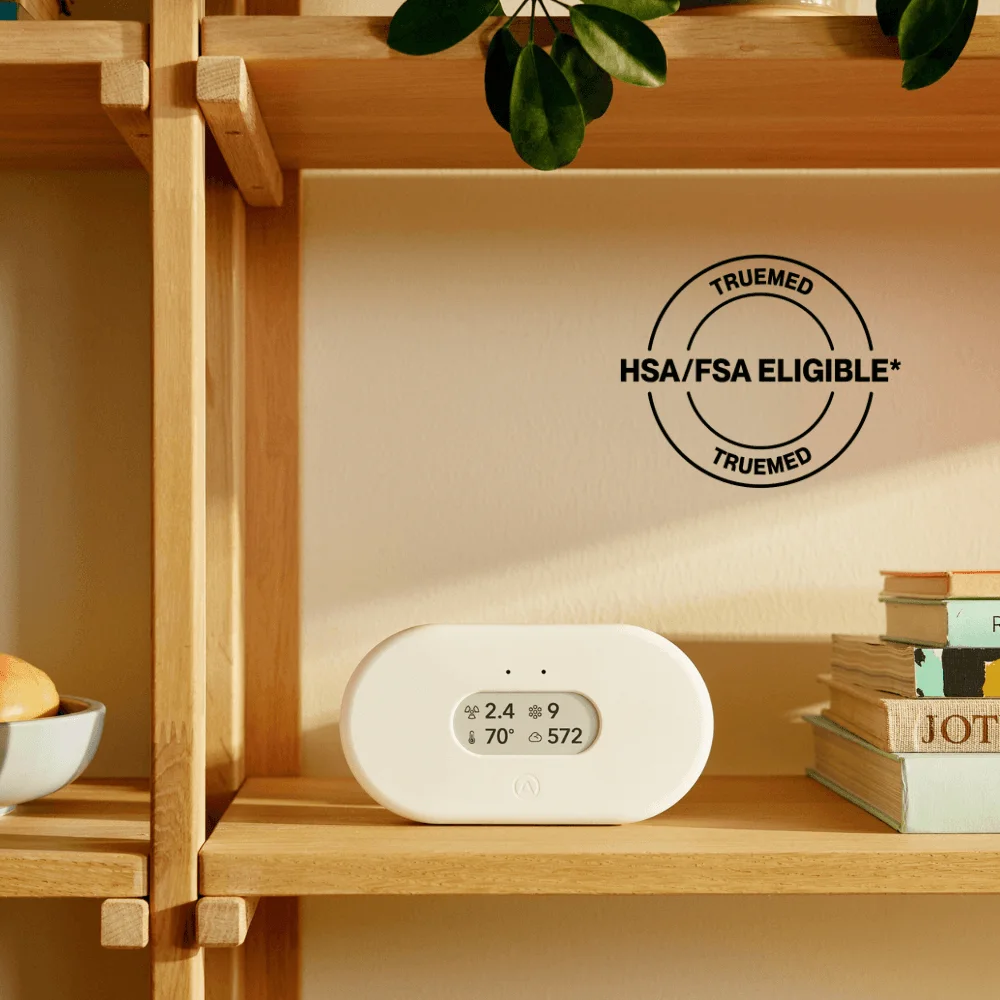
For multi-pollutant coverage including radon, the Airthings View Plus adds particles, VOCs, and radon to CO2 tracking at a higher price. For an affordable particle-focused alternative, the Temtop M2000 measures PM2.5 and PM10 with a rechargeable battery. Our CO2 monitor guide compares the Aranet4 with smart-home and classroom options.
Buying advice
The Aranet4’s price sits above generic CO2 meters but below multi-sensor monitors, and the gap is easy to justify with its sensor class and battery life. Avoid paying extra for bundled accessories you will not use — the monitor, batteries, and a basic mounting option are what most buyers need. It is popular enough that stock fluctuates; if it is out of stock at one retailer, compare current prices at another rather than paying a marketplace markup.
Frequently asked questions
What is a good CO2 reading?
Outdoor air is roughly 400–450 ppm. Indoors, readings below 1,000 ppm are generally considered well-ventilated, while sustained levels well above that are a sign the room needs fresh air. Guidance varies by organization, so treat the display as a ventilation cue rather than a health threshold.
How long does the battery really last?
The manufacturer states battery life of up to several years depending on settings and usage. Features like frequent backlight use or constant alarm modes reduce that, but the Aranet4 remains one of the most power-efficient monitors in its class.
Does it need Wi-Fi?
No. The Aranet4 connects over Bluetooth to the free Aranet Home app. There is no cloud account required, and no Wi-Fi to configure — which also means you cannot check readings remotely without additional setup.
Can it be mounted on a wall?
Yes. The device has mounting options in its accessories and works fine sitting on a desk or shelf. Keep it away from direct sunlight, vents, and breathing zones for the most representative room readings.
Does it need calibration?
The NDIR sensor self-calibrates based on fresh-air exposure, so no manual calibration is needed for normal use. Keeping the device in rooms that get regular ventilation supports accurate readings over time.