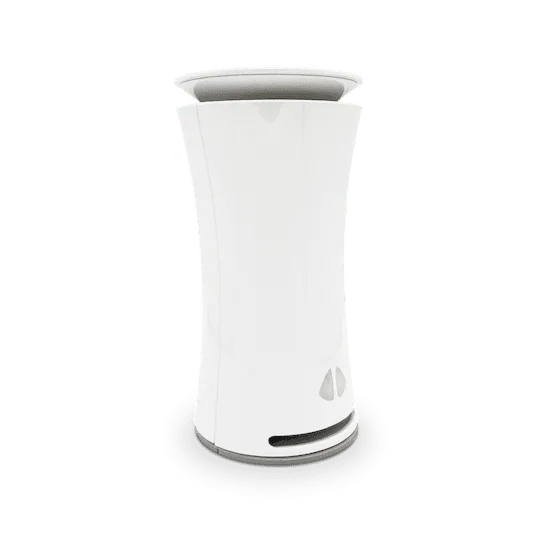
Some households want one number on a screen. Others want the full picture — every pollutant, every trend, exportable and searchable. The uHoo Caeli was built for the second group. Based on its published specifications, it tracks one of the broadest sensor suites in the consumer market: CO2, TVOC, PM2.5, PM10, temperature, humidity, and air pressure, all pushed to your phone over Wi-Fi with real-time alerts.
The short verdict: if you are detail-oriented and willing to look at data, the uHoo turns indoor air into a readable story. It is wired-only and priced above typical monitors, so it suits homes where someone will actually open the app — not households that want a passive dashboard light.
The problem it solves
Indoor air problems rarely announce themselves as one pollutant. A new sofa off-gasses VOCs for weeks, cooking spikes particles, and CO2 builds up overnight — all in the same house, often at different times. Most monitors make you choose which slice of that story to follow. The uHoo’s appeal is that it does not: the app tracks everything on one timeline, so you can correlate a headache with last night’s CO2 climb, or a musty smell with a humidity streak.
The alert system is where uHoo earns its keep for health-conscious households. The app sends real-time notifications when a pollutant crosses the level you set, and it keeps historical reports you can export. For a family managing asthma or allergies, that turns the device from a curiosity into a daily tool — you learn which activities trigger particle spikes in your specific home and adjust accordingly.
How it fits into a real home
Because it is mains-powered, the uHoo lives near an outlet — most commonly in a living room, a child’s bedroom, or a home office, wherever the household spends its indoor hours. The compact design sits on a shelf without dominating the room, and the app’s dashboard is genuinely well organized: current readings on top, trends below, alerts in a clear log.
Where it really shines is long-term pattern hunting. After a month of data, you can see the weekly rhythm of your home’s air — the particle spike every weekday at 6 p.m. (dinner cooking), the CO2 rise in the home office each afternoon, the humidity dip in winter. That longitudinal view is what uHoo delivers better than almost anything else at this size.
Who should skip it
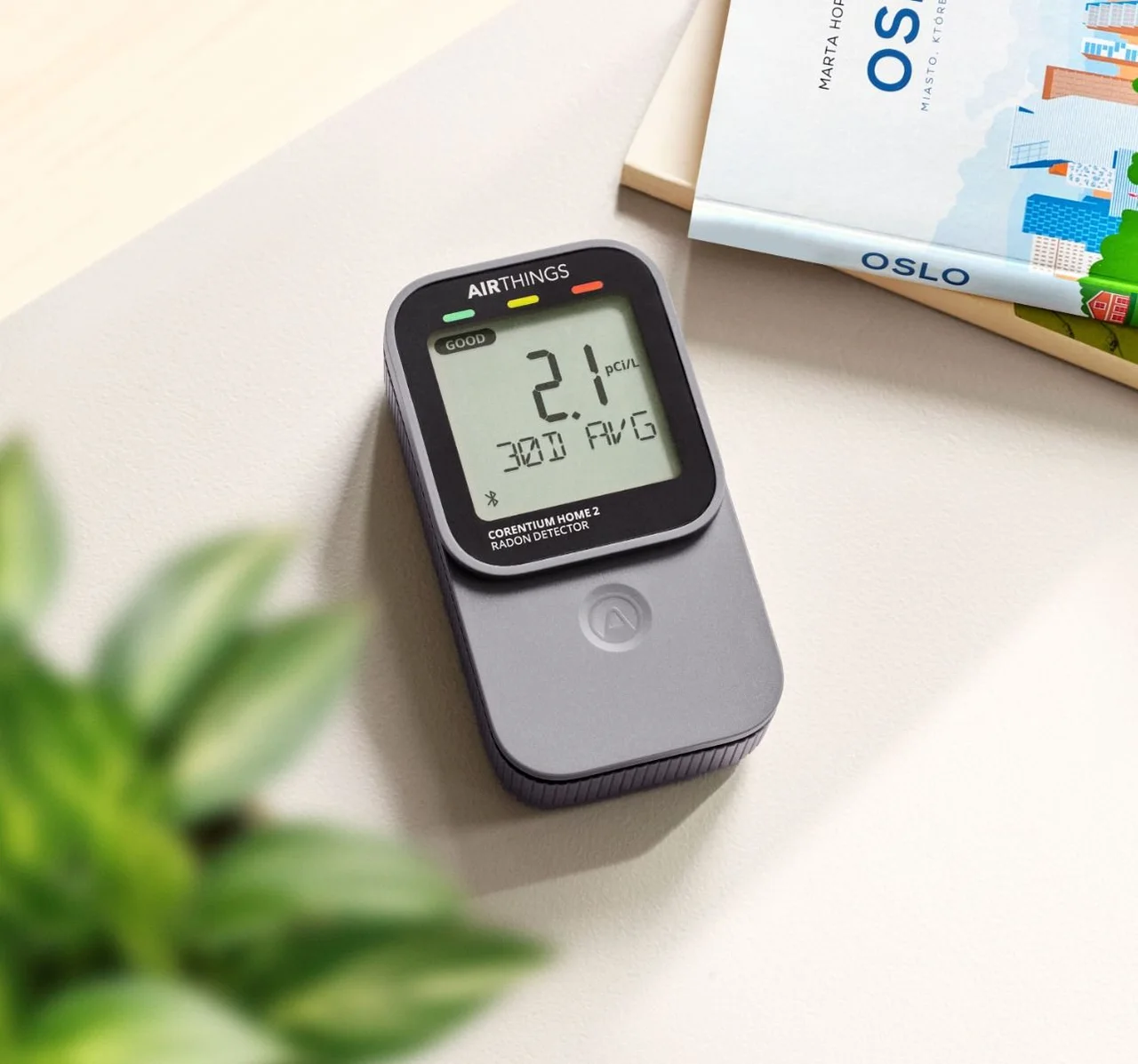
If you want a battery-powered monitor you can move between rooms freely, the uHoo’s wired power requirement is a real constraint. If you do not enjoy apps and dashboards, its breadth is wasted — a simpler display-driven monitor will serve you better. And if radon tracking is a priority, note that the uHoo does not include a radon sensor; you would need a separate device.
Alternatives
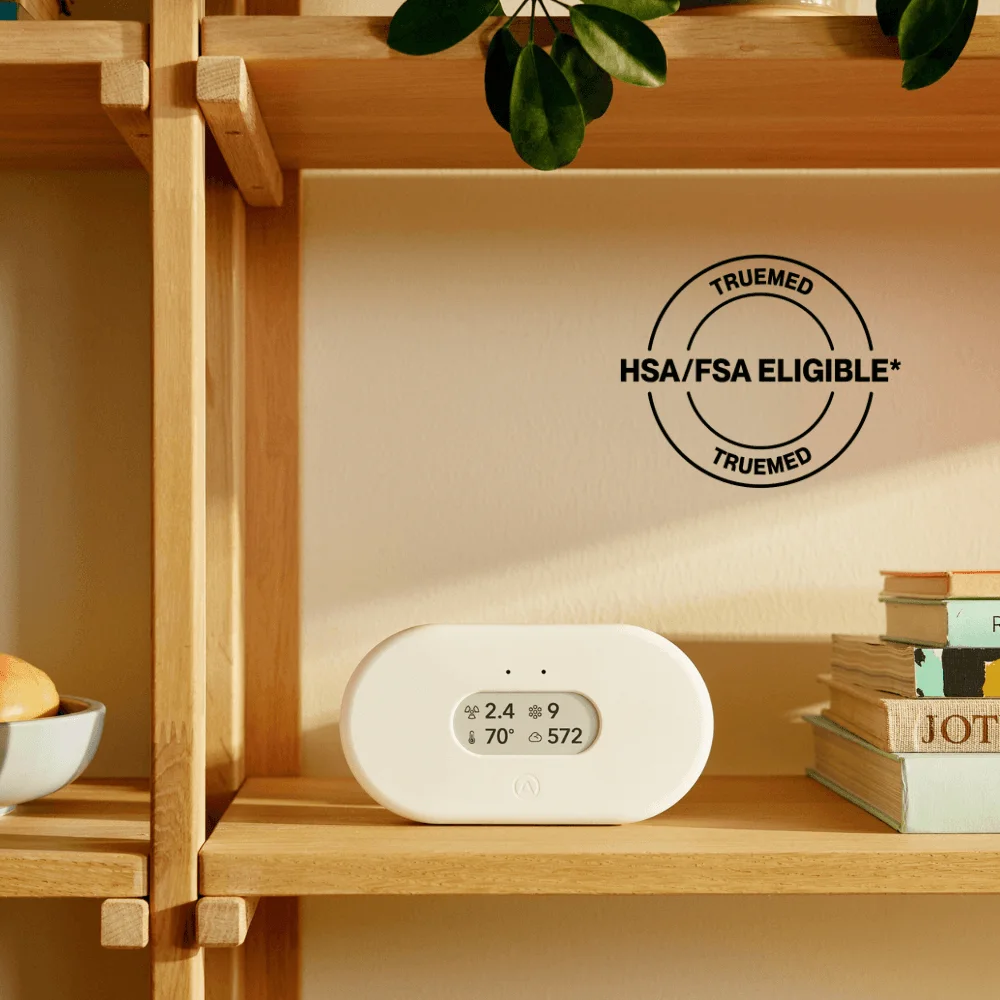
For radon plus everyday pollutants in a battery-powered design, the Airthings View Plus is the closest all-rounder. For laser-grade particle accuracy, the IQAir AirVisual Pro leads that specific metric. And for a budget multi-parameter start, the Temtop M2000 covers particles and AQI at a fraction of the price.
Buying advice
The uHoo is a premium device, and the right buying question is honest: will you still be checking the app in six months? Buyers who commit to the habit tend to love it; impulse buyers find the breadth wasted. Watch for bundle pricing with replacement sensors, and note that the unit is wired — factor in extension-cord routing if your chosen outlet spot is awkward. As with all monitors in this class, compare current prices across retailers before buying.
Frequently asked questions
What exactly does the uHoo measure?
Per the manufacturer's published specifications, the uHoo Caeli tracks CO2, TVOC (total volatile organic compounds), PM2.5, PM10, temperature, humidity, and air pressure — one of the broadest consumer sensor suites available.
Does it need a subscription?
Core monitoring, alerts, and history work through the free uHoo app. Check the manufacturer's current app terms for any premium features, but basic functionality does not require a subscription in our research.
Can it detect mold?
It cannot detect mold itself, but it tracks the humidity and temperature conditions mold needs to grow. Sustained high humidity readings are a signal to investigate airflow and moisture sources in that room.
Is it battery powered?
No. The uHoo Caeli requires a USB power connection, so plan placement around an outlet. That is the main tradeoff for its sensor suite and continuous Wi-Fi reporting.
How do I use the data to improve my air?
Start by watching the trend view for a week. Correlate spikes with activities — cooking, cleaning, new furniture — then act on the biggest ones: ventilate during cooking, open windows when CO2 climbs, and address humidity sources. For health decisions, consult relevant local guidance and professionals.