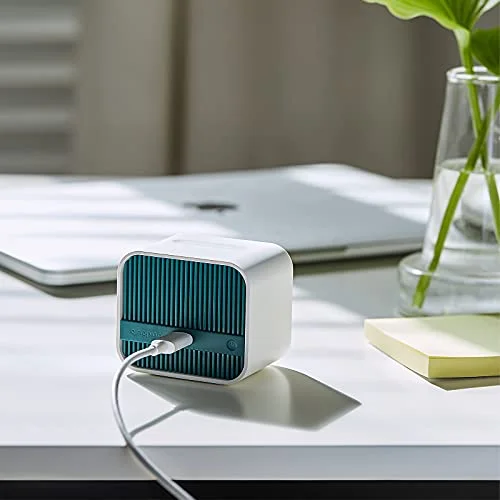
New parents think about the nursery in terms of what they can see — the crib, the monitor, the changing table. Air is the invisible part, and babies’ rooms deserve extra attention because infants spend long hours in one space and are more sensitive to indoor pollutants. An air quality monitor with quiet, app-based alerts gives parents the reassurance of continuous data without a glowing screen at bedtime.
This guide covers the monitors we recommend for nurseries, chosen for quiet displays, dependable sensors, and simple operation for sleep-deprived adults.
What to look for
- Night-friendly display. A bright screen is a dealbreaker in a nursery. Look for dimmable displays, app-only alerts, or a monitor you can place out of sight.
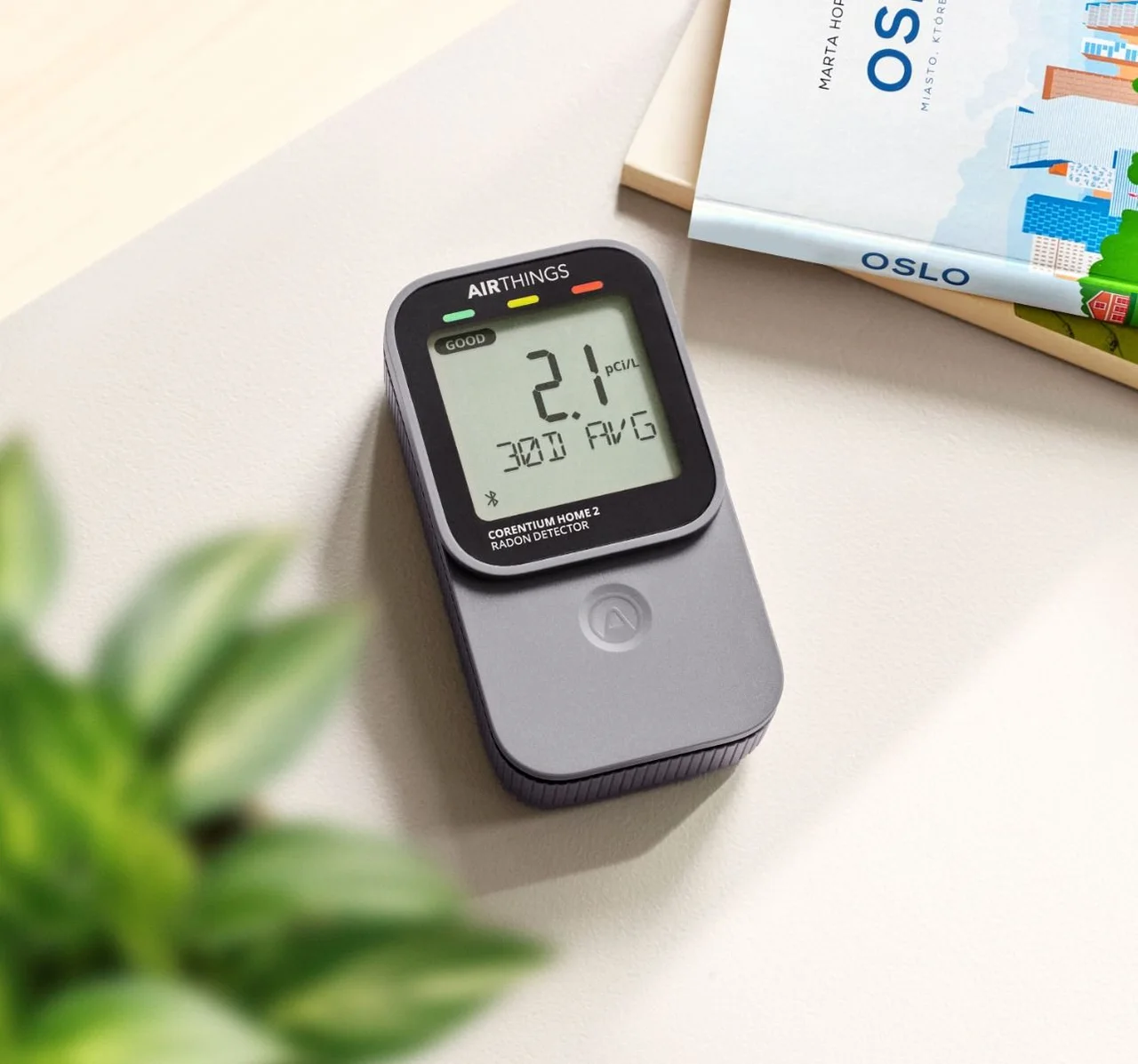
- Sensor relevance. PM2.5, CO2, temperature, and humidity are the nursery essentials. VOCs matter if you recently painted or added new furniture; radon matters on lower floors.
- Alerts you can check from bed. App alerts let you glance at your phone instead of walking to the crib. Sound-based alarms are less useful at 2 a.m.
- Power flexibility. Battery models sit anywhere without outlet constraints; wired models need placement planning but never run out of power.
- Accuracy expectations. Consumer sensors are trend tools, not lab instruments — the goal is catching problems early and tracking changes, not publishing numbers.
The picks
Qingping Air Monitor Lite — best budget nursery monitor
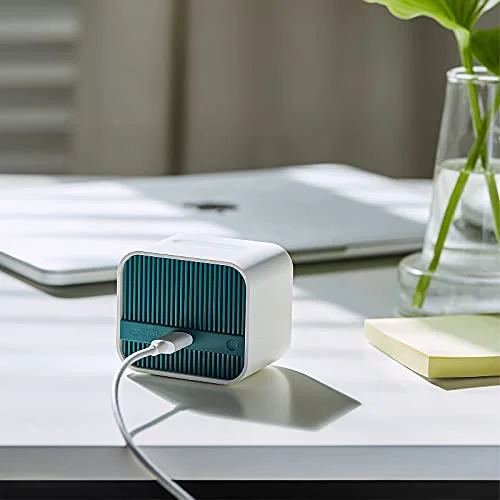
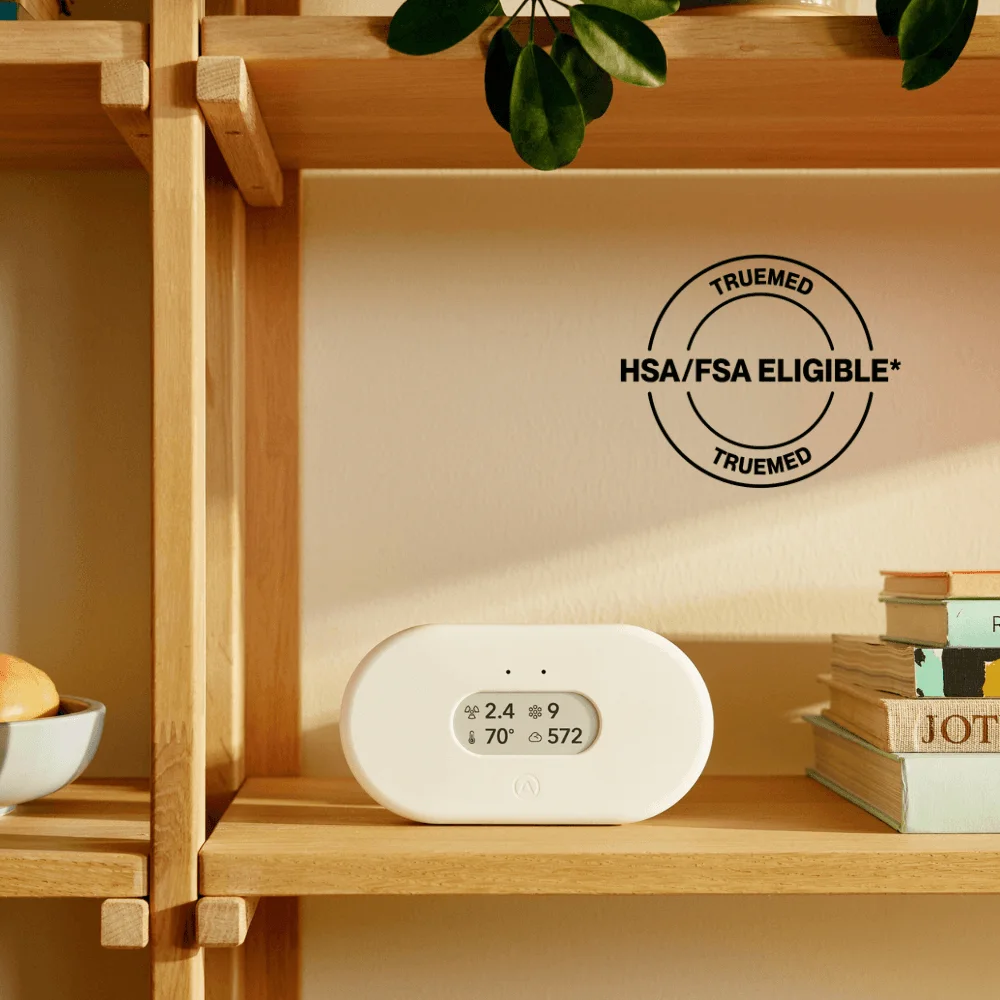
The Qingping Air Monitor Lite is a natural nursery fit: affordable, quiet, and simple. Its large e-ink display shows PM2.5, temperature, and humidity clearly when you look at it, but it does not glow, so it will not disturb sleep. Optional Wi-Fi adds app history. It skips CO2, VOCs, and radon — fine for many rooms, but consider the next pick if you want more coverage in a newly furnished nursery.
EcoQube Air — best display and multi-sensor balance
For a nursery that also needs VOC tracking — common after painting or adding nursery furniture — the EcoQube Air brings CO2, PM2.5, VOC, temperature, and humidity into a compact, design-forward unit with a Wi-Fi app. Its OLED display is beautiful but bright, so plan to dim it or place it out of the sleep line of sight. The premium price is the main hesitation for a device that mostly watches one room.
uHoo Caeli — best for allergy-prone families
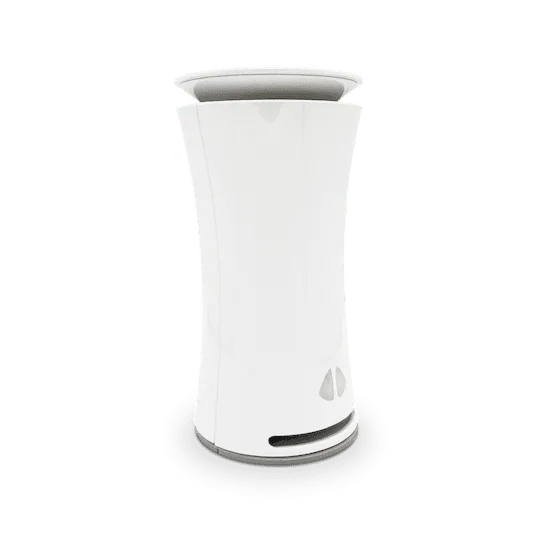
The uHoo Caeli is the data-heavy choice for families managing asthma or allergies. Its broad sensor suite — including PM2.5, PM10, CO2, and VOCs — feeds an app with real-time alerts and exportable history, so you can correlate nursery readings with symptoms and activities. It is wired-only, which limits placement, and it costs more than nursery monitors typically do, but for a household that wants the full picture it is the most capable option here.
Real-world usage scenarios
- A newly furnished nursery. VOC off-gassing from paint, cribs, and mattresses is a common first-month concern. A monitor with VOC tracking shows the levels drop over time — and tells you when to ventilate.
- The stuffy nursery. Closed doors and winter heating push CO2 up overnight. A monitor with app history shows the morning reading and the pattern across nights.
- Bedtime in a bright room. If the monitor sits on the dresser across the room, a dimmable display or app-only alerts keep it from becoming a nightlight.
- Sick-season tracking. During allergy season, parents can watch PM2.5 and humidity together and adjust purifier and humidifier use based on data rather than guesses.
Buying advice
Buy for the specific concern: PM2.5 and humidity cover most nurseries; add VOC tracking if the room was recently furnished; add radon capability only on lower floors or known-risk regions. You do not need the most expensive monitor in the room — a budget display model in the right spot beats a premium unit in a drawer. Keep the monitor out of the crib’s direct airflow and away from the humidifier to avoid misleading readings.
Frequently asked questions
What should a nursery air quality monitor measure?
At minimum, temperature, humidity, and PM2.5. CO2 is valuable in rooms where doors stay shut, and VOC tracking helps after painting or adding new furniture. Radon monitoring belongs on lower floors or in known-risk regions.
Are consumer monitors accurate enough for a nursery?
Consumer monitors are trend indicators, not lab instruments, but they reliably catch meaningful changes — a humidity spike, a CO2 climb, a particle surge — which is exactly what parents need. For formal decisions, use professional testing.
Where should I place the monitor?
Away from the crib's direct airflow, windows, vents, and the humidifier, at roughly breathing height. That gives readings closer to what the baby actually experiences rather than what the humidifier puts out.
Can the display be turned off at night?
Many models offer dimming or app-only modes; others can be placed out of sight while the app still shows readings. Check the specific model's display options before buying if night darkness is a priority.
Should I also get a baby monitor?
An air quality monitor complements a video or audio baby monitor — it adds environmental data (air, temperature, humidity) that baby monitors do not provide. Most households use both.