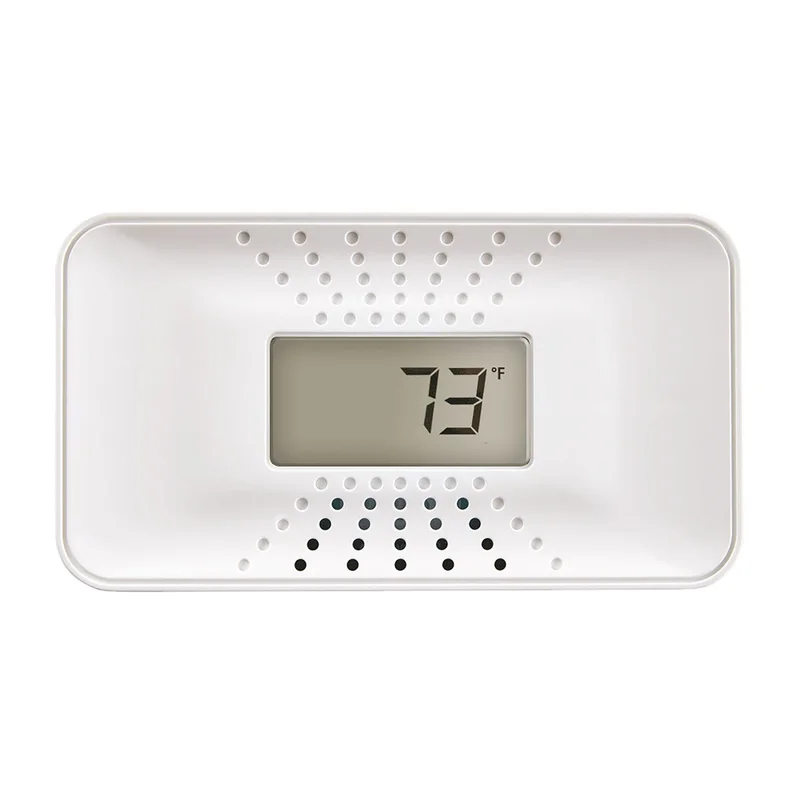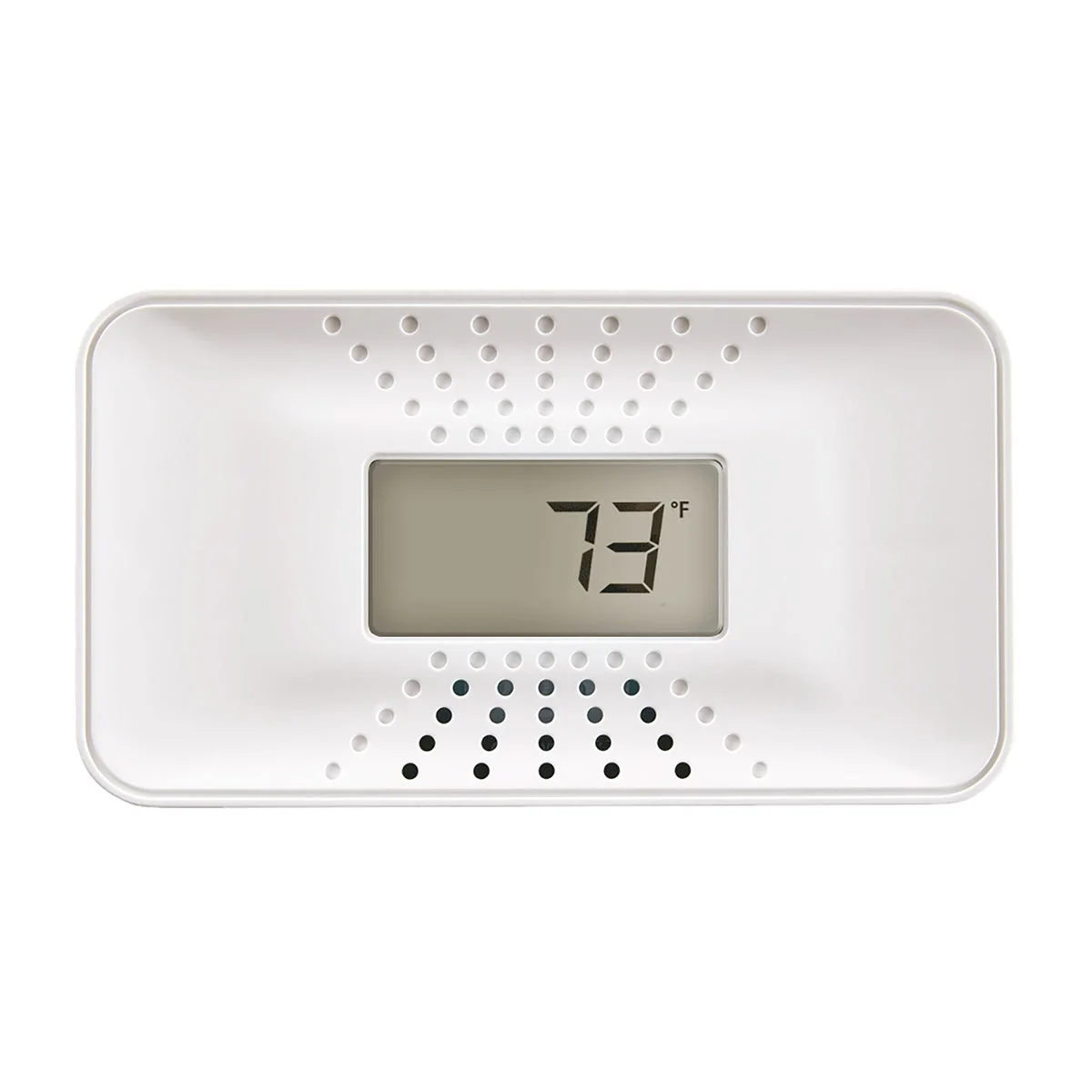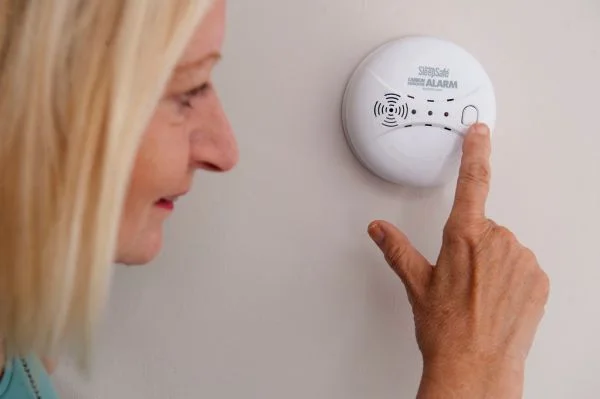
The First Alert CO710 is the alarm you notice only when you need it — a tabletop carbon monoxide detector with a digital display that quietly shows the room’s CO level in parts per million. It is not flashy, it is not smart, and that is exactly why it is one of the most recommended CO alarms in the country.
The short verdict: based on its published specifications, the CO710 is a dependable sealed-battery detector with an electrochemical sensor, a built-in 10-year lithium battery, and a display that takes the guesswork out of “is that beep real?” For hallways and living areas in most homes, it is the right tool at the right price.
The problem it solves
CO alarms without displays make you play a guessing game: the alarm beeps, and you have no idea whether levels are climbing or a sensor is having a moment. The CO710’s digital readout shows the actual ppm, so a middle-of-the-night alarm becomes a decision with data — check the number, follow the emergency protocol, and let the history inform the next step. The electrochemical sensor is the industry-standard technology for CO detection, and the sealed 10-year lithium battery means there is no battery door to maintain and no wiring to fail — exactly when fuel-burning backup heaters and generators are most likely to be running.
How it fits into a real home
Placement is simple: set it on a shelf, table, or countertop in a hallway outside sleeping areas, a living room, or the main floor — away from vents, direct sunlight, and high-humidity areas. Because the battery is sealed for the life of the alarm, there is no cord to route and no battery swap to remember; it stays powered through the storm that kills the power. The test and silence buttons are straightforward, and the end-of-life beep tells you when the unit itself needs replacing.
For homes with gas furnaces, wood stoves, or attached garages, the CO710 is the dependable backbone of a CO strategy — and its display is the feature that keeps it ahead of cheaper beep-only alarms.
Who should skip it
If you want phone alerts while away from home, the CO710’s lack of connectivity rules it out — a smart alarm like the Nest Protect is the answer. If you prefer a wall-mounted or hardwired install, or want smoke and CO coverage in one ceiling unit, other models fit better. And if you are outfitting a new home and want one unit covering both smoke and CO, a combination alarm saves a ceiling spot.
Alternatives
For peak-level memory in a plug-in alarm, the Kidde Nighthawk KN-COPP-3 records the highest reading since reset. For smart alerts and smoke coverage combined, the Nest Protect is the connected pick. Our CO detector guide compares all of them.
Buying advice
The CO710 is inexpensive enough that the buying decision is about coverage, not price: count your floors and sleeping areas, and buy one per zone. There is no reason to wait for sales on basic CO alarms, but buying a multi-pack when discounts appear is a sensible way to complete whole-home coverage. Remember the 5–10 year service life — when the end-of-life beep arrives, replace the unit, not just the battery.
Frequently asked questions
What does the display show?
The CO710 displays the current CO level in parts per million, plus alarm patterns and battery status. The reading updates continuously, so you can watch levels rise or fall rather than waiting for an alarm threshold.
Does it work during a power outage?
Yes — the alarm runs on its sealed 10-year lithium battery, so detection continues through outages with nothing to replace. The whole unit is replaced at end of life rather than serviced.
Where should I install it?
On a shelf, table, or countertop on each level, ideally in hallways near sleeping areas. Avoid placing it directly above fuel-burning appliances, near vents, or in direct sunlight.
How long does the alarm last?
Consumer CO alarms are typically rated for 5–10 years of service. The unit signals end of life with a specific beep pattern — at that point, replace the whole alarm.
What if it alarms with no visible CO source?
Treat the alarm as real: ventilate, get everyone out if levels are significant, and call emergency services or your utility to investigate. Intermittent alarms can trace to running vehicles, heaters, or appliance backdrafts — a professional check is the safe response.