Water damage is the home insurance claim that starts small: a pinhole leak in a supply line, a failing water heater, a washing machine hose — discovered hours or days later as a ruined floor. Leak detectors compress that timeline from days to seconds. A sensor under the sink that alarms when water touches its probes can be the difference between a mop-up and a remodel.
Here are the leak detection setups we recommend, from $30 sensor packs to whole-home automatic shutoff systems.
What to look for
- Detection method. Most sensors use probe contacts that alarm on contact with water. For supply-line failures, in-line shutoff systems monitor flow and pressure and cut the water automatically.
- Alerts. Local alarms are the baseline; app push notifications matter when nobody is home. Both are better.
- Coverage per dollar. Water finds the weak spots — under every sink, behind the toilet, near the water heater, washing machine, and sump. Sensors are cheap; coverage is the strategy.
- Power and reliability. Battery sensors must signal low battery. Wi-Fi sensors need a network near the installation point.
- Automatic shutoff. For catastrophic leaks (a burst supply line), only a shutoff valve stops the flow without a human in the house.
- Ecosystem fit. Choose sensors that match your smart-home platform if you want them in one dashboard.
The picks
Flo by Moen Smart Water Shutoff — best whole-home protection
For homeowners who want the full safety net, the Flo by Moen is the recommendation: it installs on the main water line, monitors flow and pressure continuously, detects leaks and unusual patterns, and can shut off the water automatically when it finds one. Its app provides monthly water reports and pressure diagnostics. It is a serious investment — professional installation is recommended — and it only makes sense for homeowners, but for preventing catastrophic water damage it is the most complete solution we cover.
Govee Water Leak Detector 3-Pack — best value smart sensors
The Govee 3-pack is the practical default for most homes: three Wi-Fi sensors with loud local alarms (80 dB+) and push notifications to your phone, at a price that makes whole-house coverage affordable. Put one under the kitchen sink, one at the water heater, one by the washing machine, and the high-risk zones are covered. They cannot stop the water — they alert while you are away — but as the alerting layer of a leak strategy, they are the best value we recommend.
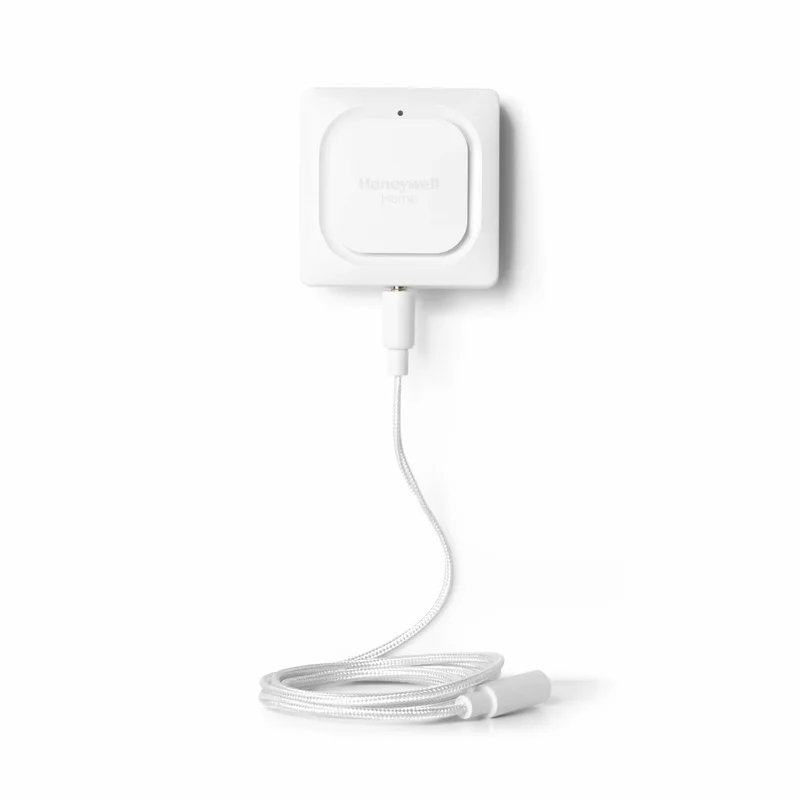
Honeywell Home Leak Detector — best simple standalone alarm
For renters and low-tech households, the Honeywell Home leak detector is the dependable simple option: a battery-powered sensor with probe contacts and a loud local alarm, no app required. It is cheap to deploy in many spots — under sinks, behind toilets, beside the dishwasher — and it does not need Wi-Fi or a smart-home platform. The tradeoff is exactly that simplicity: no phone alerts when you are away.
Real-world usage scenarios
- The washing machine. Supply hoses fail without warning; a sensor on the floor behind the machine is the classic first line of defense.
- The water heater. A slow drip or tank failure under the heater is invisible until the floor buckles. A sensor here pays for itself.
- The vacation home. A smart shutoff system means a burst pipe while you are away becomes a phone notification and an automatic cutoff instead of a flooded home.
- The rental apartment. Standalone sensors need no installation and move with you — the right fit for lease-protection without permanent changes.
Buying advice
Layer the defense: sensors everywhere cheap, shutoff where catastrophic risk lives. Start with a multi-pack of smart sensors at the high-risk fixtures, then consider an in-line shutoff if you travel often or have expensive finishes. Check sensor battery life and Wi-Fi reach before buying; a sensor with a dead battery or no signal is decoration. For shutoff systems, factor in professional installation and verify the valve fits your plumbing. Seasonal sales on sensor multi-packs are common — that is the time to complete coverage.
Frequently asked questions
Where should I put leak sensors?
Prioritize fixtures with supply lines: under kitchen and bathroom sinks, behind the washing machine, beside the water heater, dishwasher, toilet, and sump pump. Anywhere water is plumbed is a candidate; start with the places you cannot see daily.
Do smart sensors work without Wi-Fi?
Local alarms work offline; push notifications require Wi-Fi at the sensor location. If your water heater sits in a dead zone, consider a standalone alarm or a mesh network extension.
What is the difference between a sensor and a shutoff system?
A sensor alerts you that water is present. A shutoff system like the Flo by Moen monitors the main line and stops the water automatically — the only option that prevents damage when nobody is home.
Are leak detectors worth it for renters?
Yes — battery sensors need no installation and can save your deposit and belongings. Renters cannot install main-line shutoff valves, but alerting sensors cover most of the value.
How do I test my sensors?
Most models have a test button, and smart sensors can be tested by touching the probes with a damp finger. Test monthly and replace batteries on schedule — a sensor you have not tested is an assumption, not a defense.