The most expensive electronics in most homes are plugged into the cheapest power strips on the market. A surge protector is the insurance policy that costs a coffee and can save a home office or entertainment setup from a single lightning-adjacent spike or grid hiccup. The difference between a $10 strip and a real surge protector is in the joules — and in knowing which devices deserve them.
Here are the surge protection options we recommend for home offices, entertainment centers, and bedside setups.
What to look for
- Joule rating. Joules measure how much energy the protector can absorb before failing. Higher is better — 1,000+ joules for important gear, and replace the unit after a major surge event.
- Clamping voltage. Lower clamping voltage means protection kicks in sooner. UL 1449-rated units publish this; look for the certification.
- Outlet count and spacing. Bulky adapters need wide spacing. Count the outlets you actually need, plus room for chargers.
- Connected equipment warranty. Reputable brands back their protectors with a warranty covering connected devices — a meaningful signal of quality.
- Extra features. USB charging, phone/data line protection, and indicator lights that tell you the protection is still active all add value.
- UPS vs. surge-only. Surge protectors stop spikes; an uninterruptible power supply (UPS) also keeps devices running through brief outages. If losing work matters, consider a UPS.
The picks
APC BE425M — best UPS with surge protection
The APC BE425M is the pick for the home office’s most important gear: a compact UPS that provides battery backup during outages plus surge protection for everything plugged into it. A router and modem on this unit keep your connection alive through brief power events, and a workstation gets time to save and shut down cleanly. It is heavier and pricier than a power strip, but for data you cannot rebuild, it is the right investment.
Belkin 12-Outlet Surge Protector — best high-capacity strip
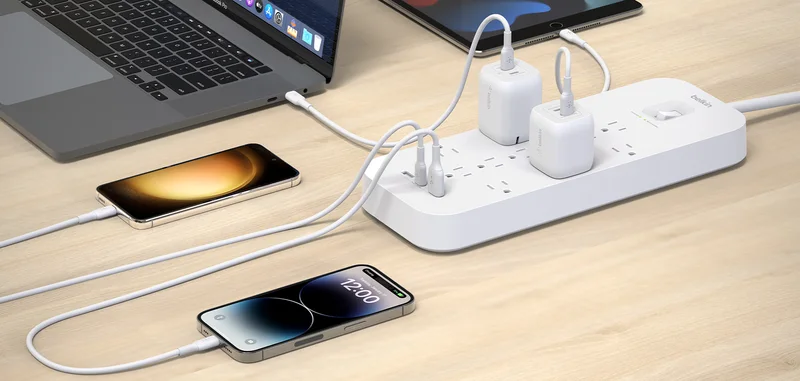
The Belkin 12-outlet unit is the desk and entertainment-center workhorse: twelve outlets with generous spacing, a high joule rating, and protection for phone and data lines per its published specs. It is the unit you buy when the TV, console, soundbar, and a pile of chargers share one wall. It is large, which is the tradeoff for the capacity — measure your setup’s footprint before committing.
Tripp Lite TLP606 — best compact option
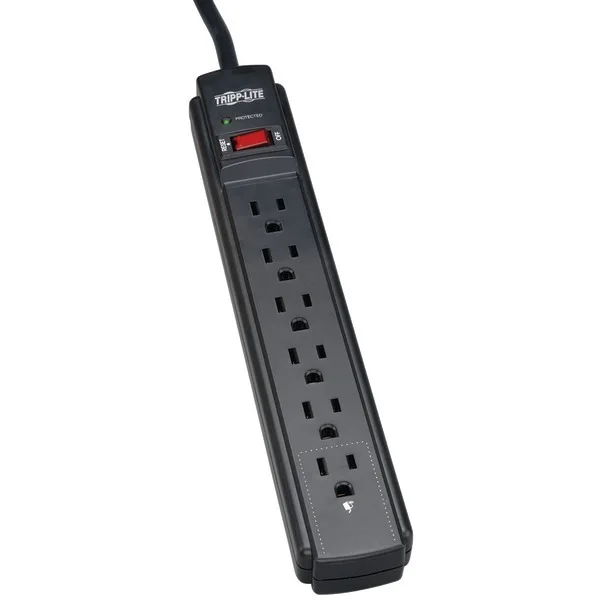
The Tripp Lite TLP606 is the tidy answer for bedside tables and small desks: six outlets with a sliding safety cover, surge protection with an indicator light, and a compact footprint from a long-standing brand. Its joule rating is lower than the big units, so keep it for lighter gear — lamps, chargers, a clock — rather than the home theater. For small setups, it is the right size and price.
Real-world usage scenarios
- The home office. A UPS on the router, modem, and computer turns a flicker from a work event into a non-event.
- The entertainment center. A high-capacity strip with data-line protection covers the TV, console, and soundbar in one tidy unit.
- The bedside table. A compact strip protects the phone charger and lamp without turning the nightstand into a junction box.
- Storm season. If your area gets frequent surges, put your most expensive electronics behind the highest-joule units and replace them after major events.
Buying advice
Rank your gear by value and put protection where it matters: a UPS for anything holding irreplaceable work, high-joule surge protection for the entertainment setup, and simple protection elsewhere. Check the clamping voltage and connected-equipment warranty — they are the difference between a real protector and a fancy strip. Replace any unit that has absorbed a major surge (many brands advise it after direct hits), and watch the indicator light: a protector that has tripped is a strip again. Sales on these are frequent; stock up when a well-rated unit drops.
Frequently asked questions
What does the joule rating actually mean?
Joules measure the total energy the protector can absorb over its life. A 1,000-joule unit protects more and lasts longer than a 400-joule unit, though no protector survives a direct lightning strike — the utility equipment and grounding are the first line.
Do surge protectors expire?
Protectors degrade with every surge event they absorb. Many brands recommend replacement after a major surge, and units with indicator lights show when protection has failed. A protector that has absorbed its limit is an ordinary power strip.
Surge protector or UPS?
A surge protector stops spikes; a UPS adds battery backup so gear keeps running through brief outages. If losing unsaved work or connectivity matters, a UPS is the upgrade worth making for the most important devices.
Will a surge protector protect against lightning?
Point-of-use protectors handle small to moderate surges. Direct or nearby lightning strikes can overwhelm them — whole-home protection starts with proper grounding and often a service-level suppressor installed by an electrician.
How do I know if the protection is still active?
Most quality protectors include an indicator light that stays lit while protection is active. If the light is out, the protection circuit has failed and the unit should be replaced.