The first 30 seconds of a small fire are the only seconds that matter — before the fire grows past what a handheld extinguisher can handle. That is why the best fire extinguisher is not the one with the longest spec sheet; it is the one mounted within reach of the room where fires actually start, with a rating matched to the fire types there.
Here are the home extinguishers we recommend, how to place them, and the 30-second routine that makes them useful.
What to look for
- Fire class rating. Kitchens need units rated for Class B (flammable liquids like cooking oil) and ideally Class K for grease fires; multi-purpose 1-A:10-B:C units cover common household fire classes. Read the rating — it defines what the unit can handle.
- Size and weight. A unit you can grab and operate under stress is worth more than a big one that stays in the garage. Balance capacity against usability.
- Pressure gauge. A visible gauge in the green zone tells you the unit is charged. Check it monthly — an uncharged extinguisher is a paperweight.
- Mounting. Units with included brackets stay mounted, and mounted units stay reachable. Placement is part of the purchase.
- Service life. Home extinguishers expire; check the manufacture date and replace or service units at end of life.
The picks
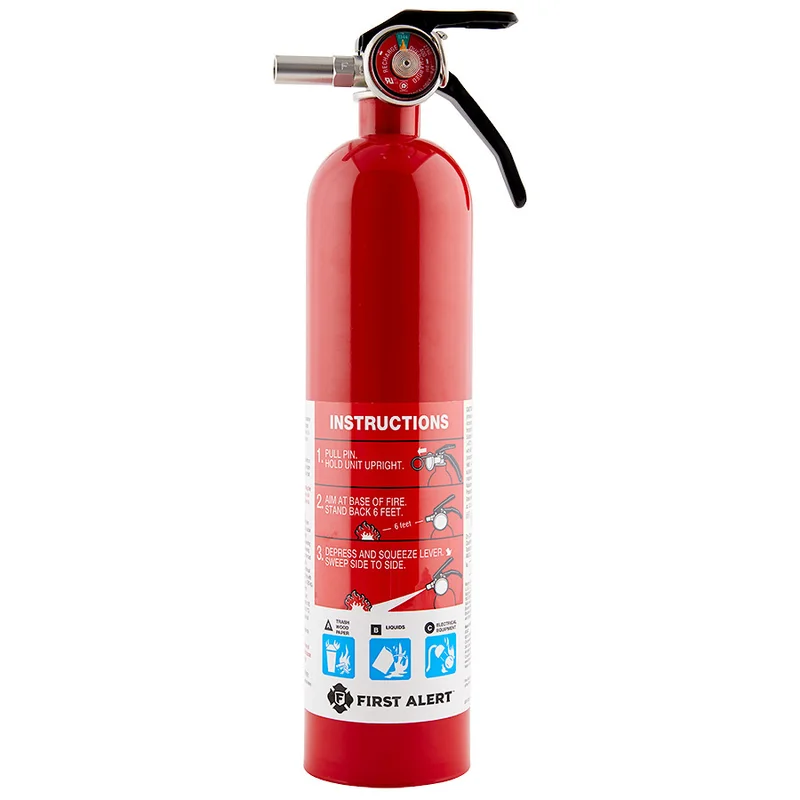
First Alert HOME1 — best kitchen fire extinguisher
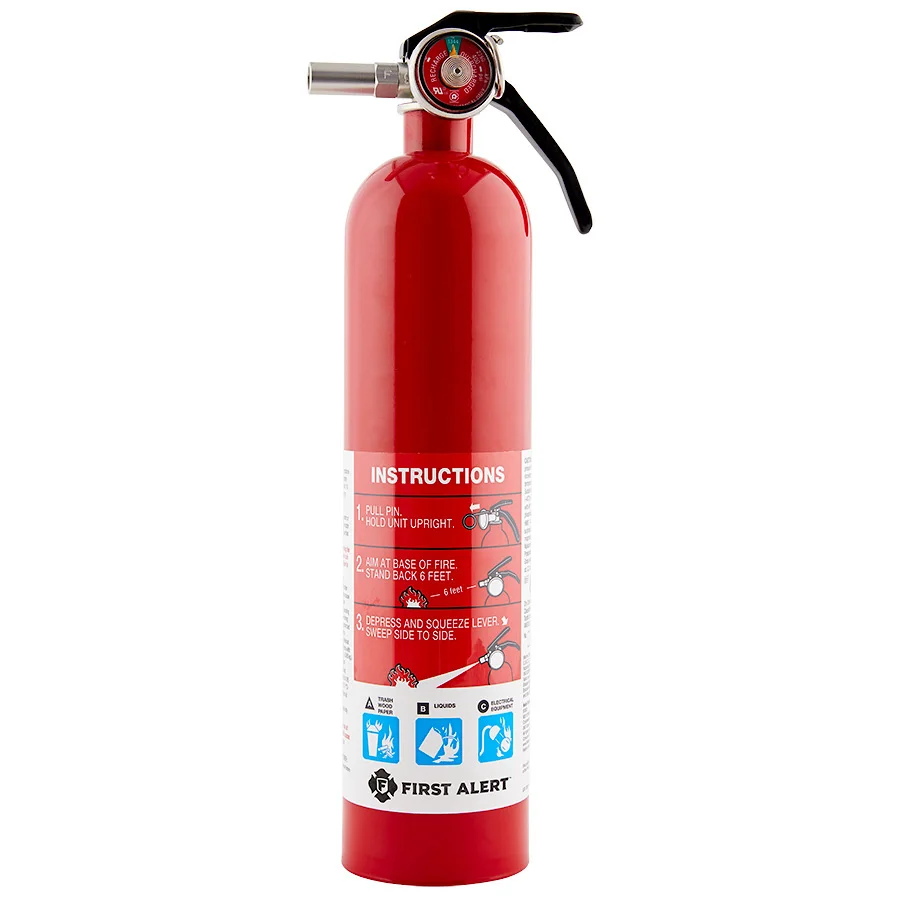
The First Alert HOME1 is the kitchen pick: a compact unit rated for the fire classes most common in cooking areas (1-A:10-B:C per its published rating), with an easy-pull safety pin and a mounting bracket that keeps it within reach of the stove. It is small enough to grab one-handed during a pan-fire moment and appropriate for everyday kitchen fires. It is not rated for every fire type, so pair it with the broader unit below for garages and workshops.
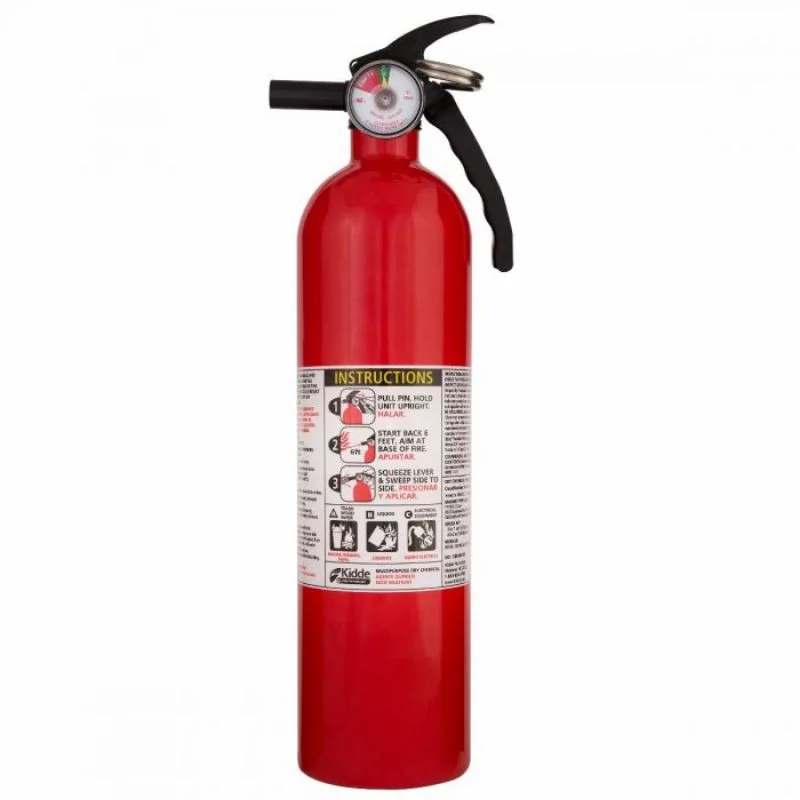
Kidde FA110 — best multi-purpose home extinguisher
The Kidde FA110 is the all-rounder: a 1-A:10-B:C rating that covers common household fire classes — wood and paper (A), flammable liquids (B), and electrical (C) — with a metal valve and handle and an easy-mount bracket. It is heavier than the kitchen-only HOME1, but it is the right unit for garages, workshops, hallways, and anywhere the fire type is less predictable.
Real-world usage scenarios
- The kitchen. The #1 fire origin room. A compact unit mounted within reach of the stove, at least 10 feet from the burners (so you can grab it even if the stove is involved).
- The garage and workshop. Flammable liquids, batteries, and tools demand a multi-purpose unit with a broad rating — the FA110’s 10-B:C handles the higher-risk profile.
- The hallway. A central unit between bedrooms and the main living area serves as the home’s second line.
- The rental apartment. A compact unit is landlord-friendly and moves with you; mounting it where the landlord allows still beats no coverage.
Buying advice
Buy for the room, not the house: a kitchen-rated unit near the stove, a multi-purpose unit for the garage, and consider a central hallway unit for large homes. Check the pressure gauge on a schedule — monthly is easy to remember with a phone reminder. Do not buy more capacity than you can lift and operate; a 10-pound unit you cannot swing one-handed is less useful than a 2.5-pound unit you can. Replace units at end of service life, and skip novelty or single-use “sprays” that are not rated extinguishers.
Frequently asked questions
How do I use a fire extinguisher?
Use the PASS routine: Pull the pin, Aim at the base of the fire, Squeeze the handle, and Sweep side to side. If the fire does not shrink within seconds, get out and call the fire department — extinguishers are for small fires, not heroics.
Where exactly should I mount it?
Near the exit path of the high-risk room, so you can grab it and still escape — not hidden behind the stove. Keep it 10+ feet from the appliance it protects and visible from the room's entry.
What do the letters and numbers mean?
Letters are fire classes (A: wood/paper, B: flammable liquids, C: electrical, K: cooking oils). The number indicates relative size — 1-A:10-B:C, the common home rating, covers wood, flammable liquids and electrical fires at household scale.
How long do home extinguishers last?
Disposable home extinguishers typically last 5–12 years depending on the model — check the date printed on the unit. Gauges should stay in the green; units that drop out of the green or show damage need replacement.
Can I use a kitchen unit on an electrical fire?
Only if it is rated C. Water-based kitchen units are not for electrical fires; a multi-purpose ABC unit covers both. Matching the rating to the room is the whole point of choosing carefully.